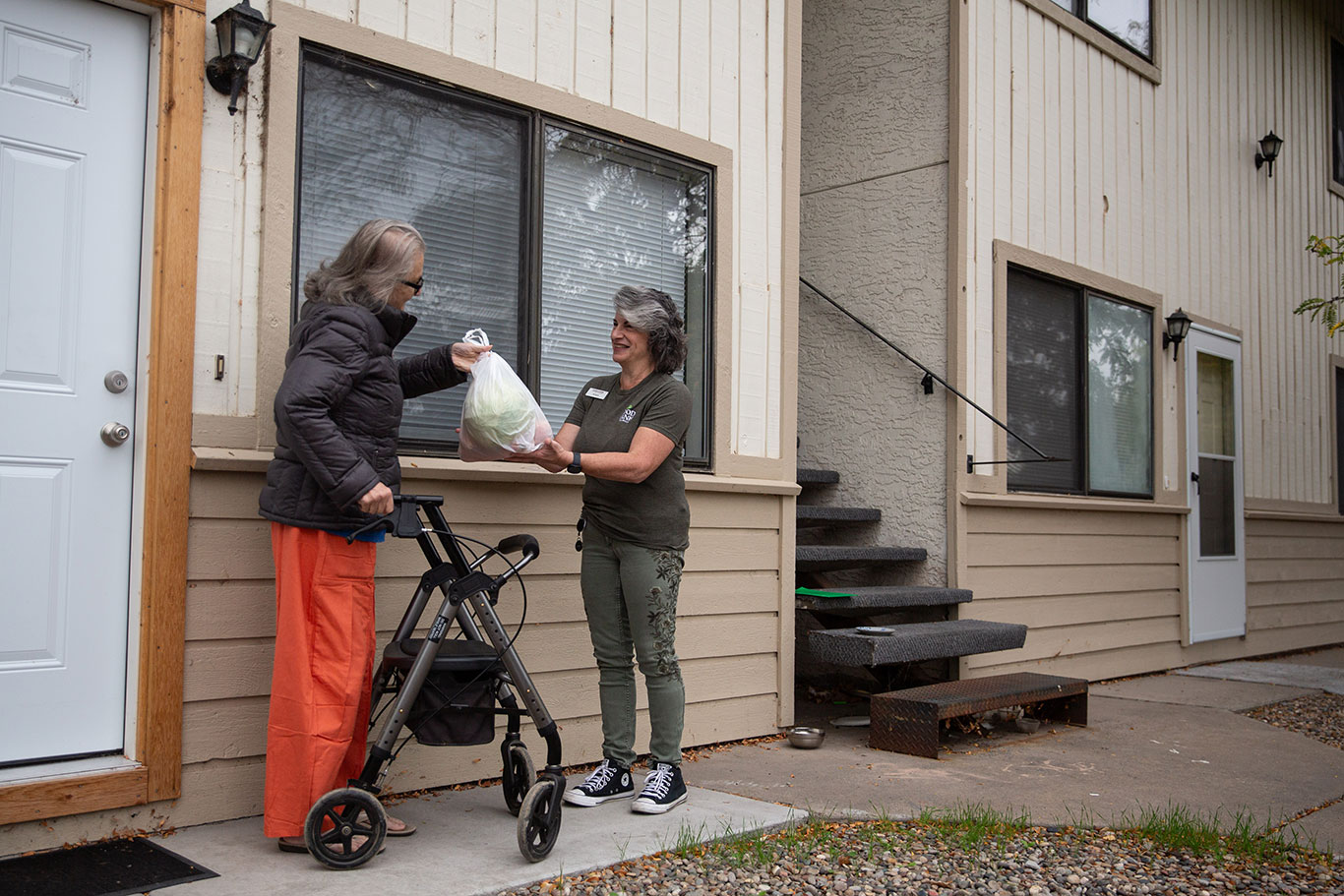
Melanie Trinkle cracked open the door to her apartment on a Thursday morning in late July, clapped her hands and let out an excited “woo-hoo!”
Her weekly Food for Health box had arrived. The 66-year-old Grand Junction resident and Air Force veteran, who has PTSD and has had diabetes for over four decades, now had a week’s supply of nutritious groceries: whole-wheat spaghetti, brown rice, canned fruit, diced tomatoes, black beans, canned chicken and enchilada sauce. She also received a bag of fresh squash, peaches and potatoes from local farms.
What was included in her delivery is not simply groceries for those with food insecurity. A dietitian and a nutritionist have chosen provisions that the American Heart Association and the American Diabetes Association classify as part of their “food is medicine” guidelines. Medical professionals recommend these items for those with prediabetes, diabetes or cardiac and pulmonary problems.
“It is the healthiest food we can possibly get,” said Angela Hyde. She oversees the direct services programs, including Food for Health deliveries from the Food Bank of the Rockies Western Slope Etkin Family Distribution Center in Grand Junction. (Food Bank of the Rockies is a Colorado Trust grantee.)
Food for Health began four years ago in the Denver metro area with four health care providers directing 203 participants to the program. The statewide count has since grown to more than 2,000 residents in 32 Colorado counties. Participants receive weekly Food for Health boxes based on the recommendations of 25 medical providers.
That increase includes a focused expansion across the Western Slope, where eight health care entities have joined the program and directed more than 130 recipients to Food for Health in the past eight months. The program has linked with delivery partners that include Meals on Wheels, private courier companies and a mobile countywide resource provider in Eagle County.
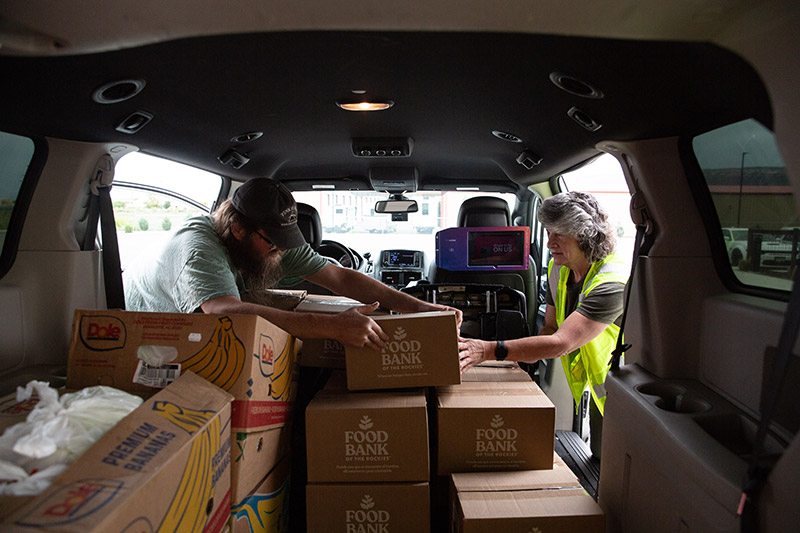
Jill Davis, programs manager for Food Bank of the Rockies’ Western Slope division, and Joe Phinnell, courier, load Food for Health boxes for delivery on Wednesday, Sept. 30, 2026, in Grand Junction, Colo. Photo by Luna Anna Archey/Special to The Colorado Trust
“We hope to add another 1,000 participants over the next year,” said Christina Gumbiner, the director of programs and operations for the Western Slope division of Food Bank of the Rockies.
Intermountain Health was the first Grand Junction-area health care provider to recognize the need for healthy food deliveries on the Western Slope, in a food-for-health movement that has spanned various programs and forms throughout the state and country.
“I pushed for this program. It’s such an easy thing to do,” said Leona Woomer, a care coordinator at Intermountain Health’s Patterson Primary Care Clinic. “Our doctors were very happy to get word of this program. They are seeing more people being compliant with dietary advice.”
Health First Colorado, Colorado’s Medicaid program, works with organizations such as the Colorado Food Cluster (also a Colorado Trust grantee) to deliver medically tailored meals to patients returning home from hospital stays in the Denver and Boulder areas.
Children’s Hospital Colorado runs the Healthy Roots Food Clinic, where patients’ families can shop and receive nutrition education and meal-planning assistance.
The 35-year-old Denver-based Project Angel Heart (also a Colorado Trust grantee) has partnered with Food for Health to deliver medically tailored meals to Coloradans living with severe and life-threatening illnesses.
The Western Slope expansion signals that the food-as-medicine concept is moving into more rural areas, where demand has been growing.
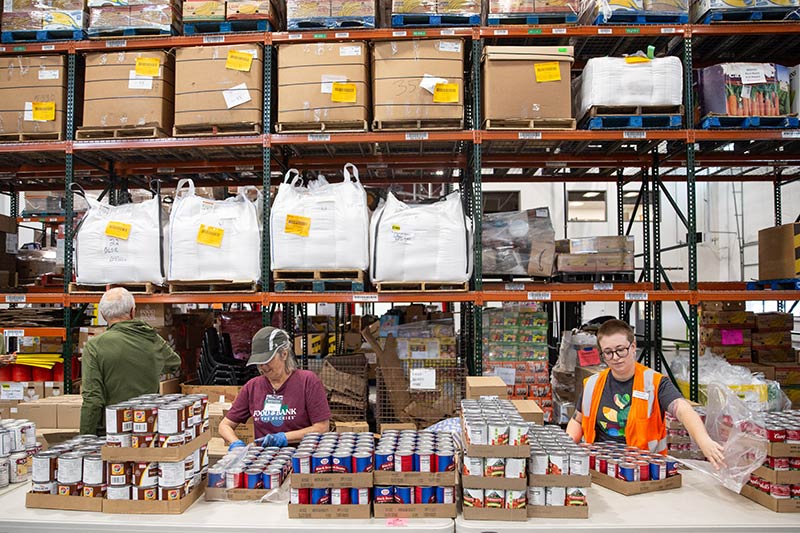
Bill Graham (left), volunteer, Julie Lopez (center), volunteer, and Caroline Rogers, volunteer operations specialist for Food Bank of the Rockies’ Western Slope division, pack boxes of food for delivery at the food bank on Wednesday, Sept. 30, 2026, in Grand Junction, Colo. Photo by Luna Anna Archey/Special to The Colorado Trust
The Veterans Administration Medical Center, the Dialysis Clinic, Inc. and PrimeHealth, all based in Grand Junction, have now joined the food bank program.
Food for Health is also working with the Uncompahgre Medical Center in Norwood, Family Health West in Fruita and the Mobile Intercultural Resource Alliance Bus program in Eagle County.
Medical providers use a two-tier assessment to determine who might benefit from Food for Health groceries, first flagging patients for having problematic “social determinants of health.” Those include food insecurity, financial troubles, uncertain living situations or exposure to drug abuse. If patients have any of those factors in their lives and their medical diagnoses include diabetes or cardiac conditions, they are given the option of receiving the food boxes.
Trinkle, who lives in subsidized housing and relies on Social Security and a military pension, said she jumped at the opportunity to participate.
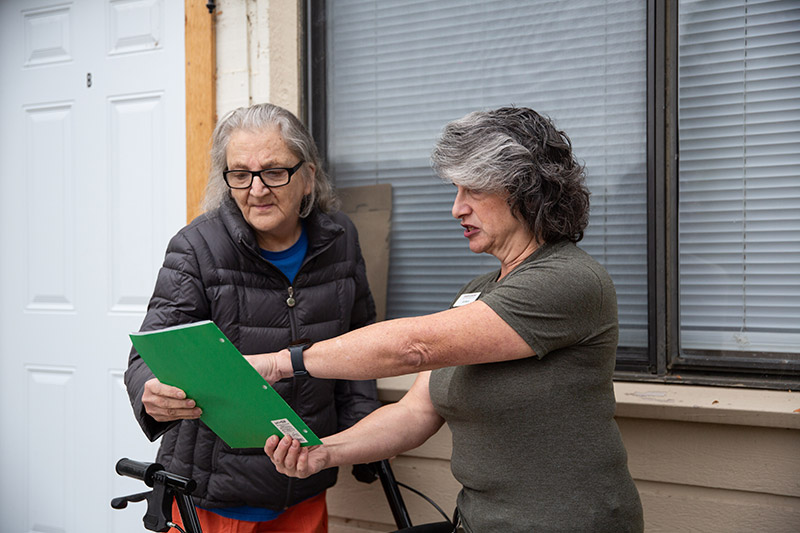
Melanie Trinkle, a recipient of the Food for Health boxes from the Food Bank of the Rockies’ Western Slope division, speaks with Programs Manager Jill Davis on the day of the delivery to Trinkle’s home on Wednesday, Sept. 30, 2026, in Grand Junction, Colo. Photo by Luna Anna Archey/Special to The Colorado Trust
“I can’t get to the grocery store, and I am often in the red at the end of the month,” she said. “It can be very tough worrying about your health and also the cost of food, and not having enough food when you are trying to take care of yourself.”
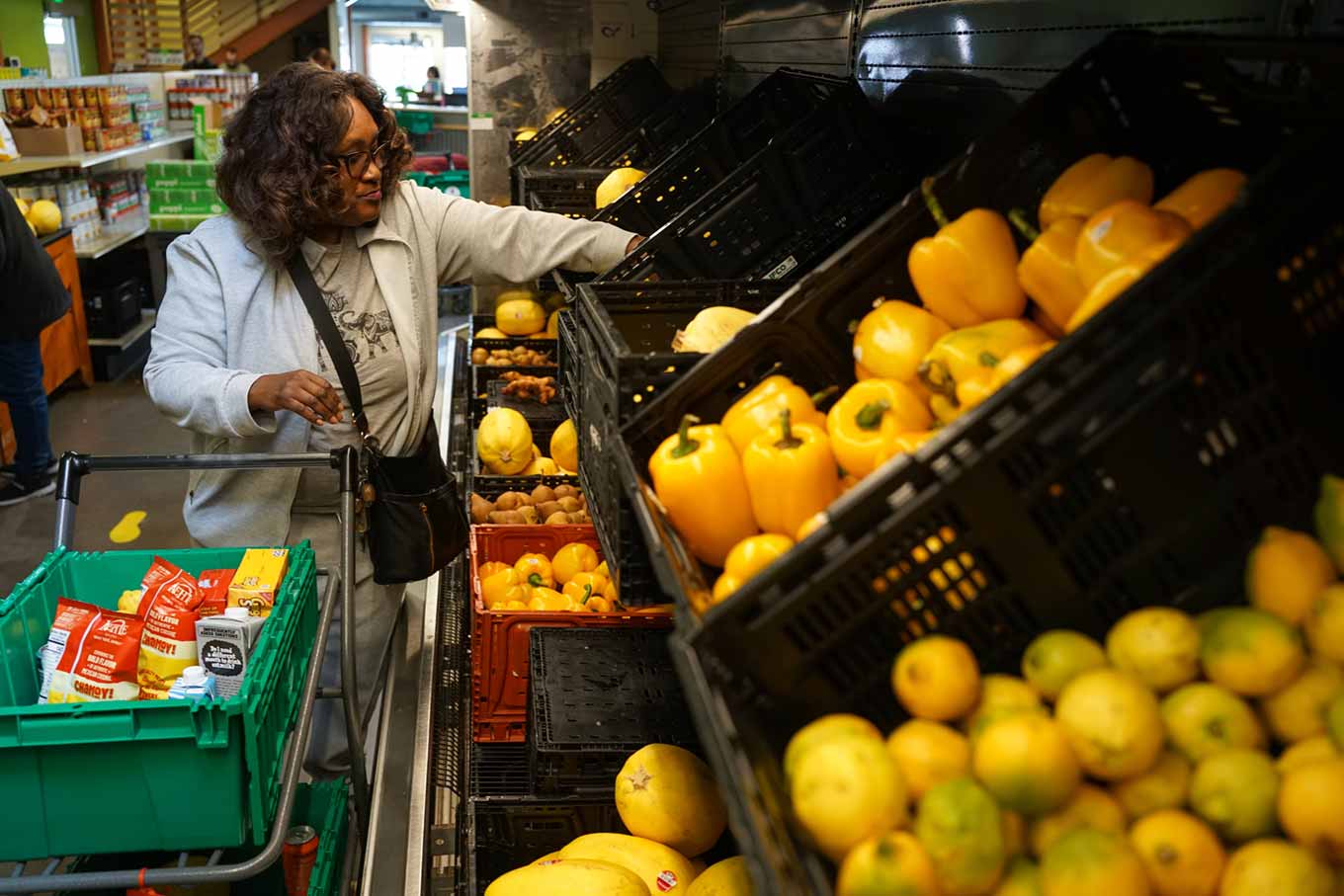
The Food for Health boxes differ from normal food bank giveaways because they only contain foods that are low in fat, sugar and salt, and high in protein and fiber. They are nutrient-dense foods that are helpful for patients with blood sugar or heart problems.
The weekly boxes come with easy recipes that use many of the included foods. On the day of Trinkle’s delivery in July, the recipe inside was for a simple-to-prepare skillet enchilada casserole.
The boxes also contain a weekly newsletter that includes brief lessons on topics such as reading food labels and understanding portion sizes. The newsletters encourage recipients to follow a diet and a lifestyle that will help keep their diseases in check. The message is repeated in Spanish and includes tips for those who may not like everything in the boxes.
“We don’t want anything to go to waste,” Hyde said.
Trinkle said most weeks she shared the healthy bounty with neighbors who, like her, can also use help with groceries.
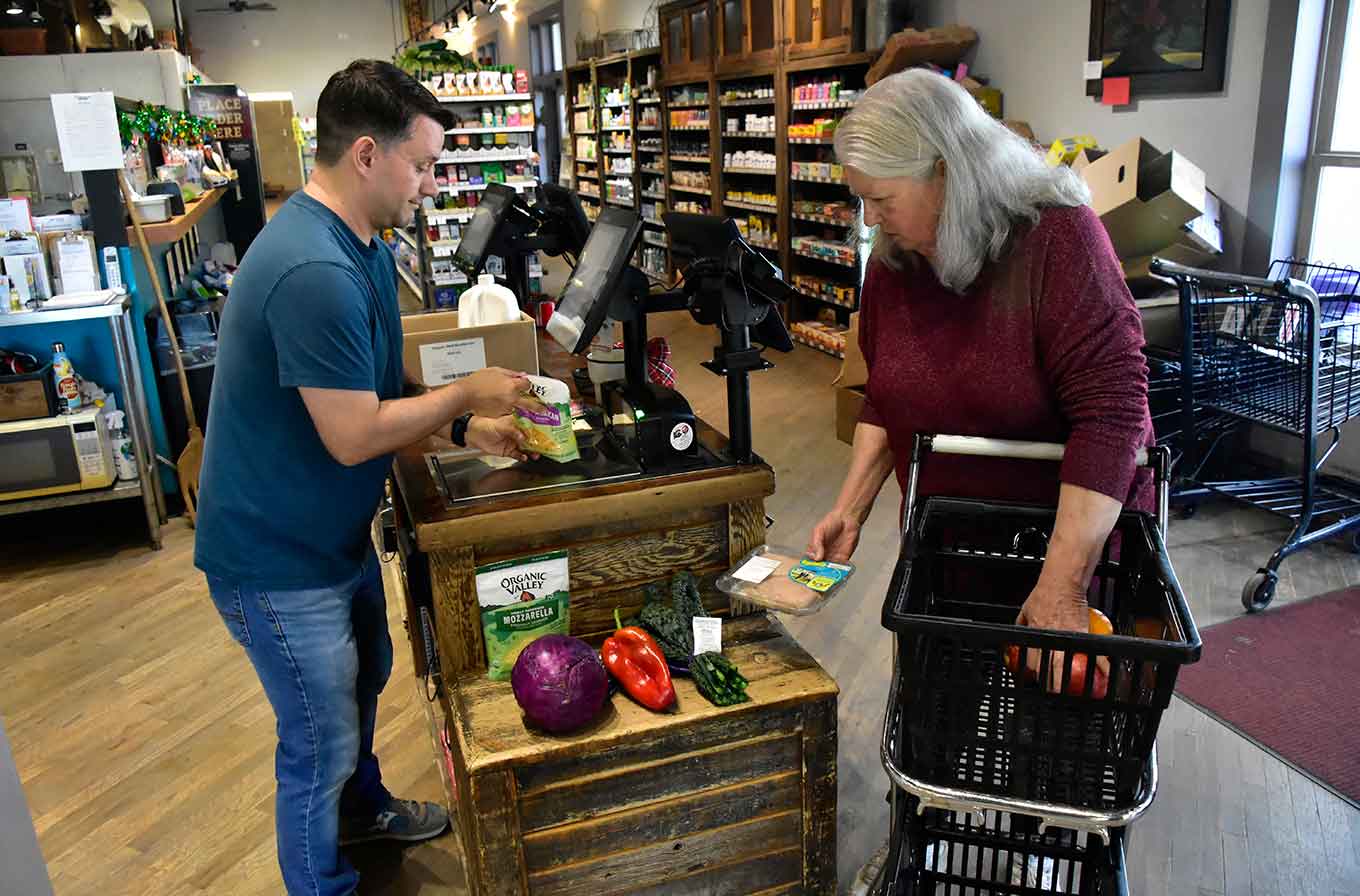
Trinkle has now moved into the second phase of the program, when participants who have received groceries for half a year graduate to another six months of gift cards. Each card can be used to purchase $35 worth of food, which can be combined with food from regular food bank giveaways.
The idea behind the switch to gift cards is that after six months of receiving healthy foods chosen by providers for them, along with lessons on healthy eating, the participants will know what to eat and how to prepare healthy food on their own. They also learn that the food-pyramid guidelines for the general population are not necessarily what they should be eating.
“When you have a chronic condition, you have to think differently,” said Jennie Kim, the nutrition manager for the Food Bank of the Rockies.
Kim said she doesn’t try to impose strict guidelines on what participants should eat, including rigid calorie limits.
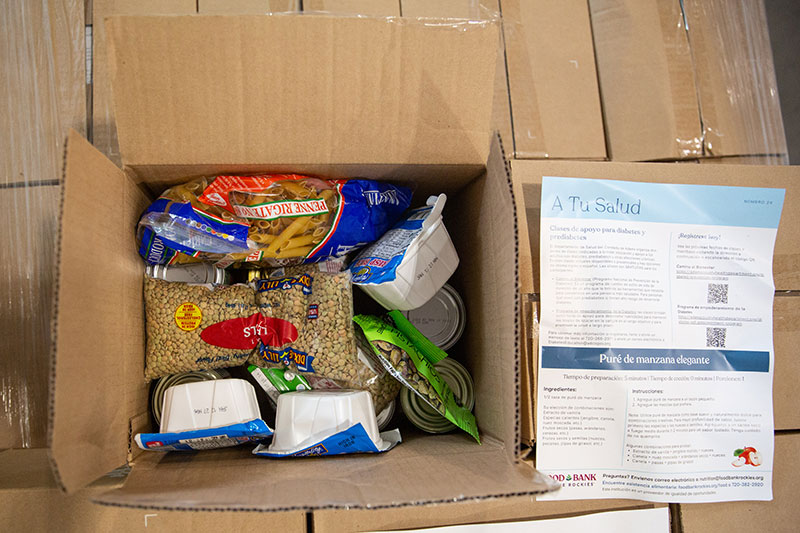
A Food for Health box is shown in this photograph taken at Food Bank of the Rockies’ Western Slope distribution center on Wednesday, Sept. 30, 2026, in Grand Junction, Colo. Photo by Luna Anna Archey/Special to The Colorado Trust
“We simply help guide their choices,” she said. “People tend to get too overwhelmed if they are being told what they can and can’t eat.”
Food for Health directors survey food box recipients at the start of deliveries and every three months thereafter to ask about their health and whether they feel Food for Health has improved their medical conditions.
Kim said more than 95% of Food for Health participants across the state have reported that their food insecurity has decreased between October 2022 and October 2026. A majority said that their blood pressure has improved or stayed the same. None of the respondents reported that their blood sugar levels had increased.
Survey results that include reports from medical providers are not yet publicly available, Kim said. She and other Food for Health directors meet regularly with program participants. They are working on ways they can share data in the future without violating patient privacy laws.
Trinkle said she knows her health has improved with the steady supply of nutritious foods. She said she has lost weight from diet and lifestyle changes and lowered her blood sugar. The standard test that measures average blood sugar rates over months shows she is nearly in the normal range.
In the past, Trinkle said her blood sugar levels were often too high because, at times, she was so poor that she subsisted on grits twice a day.
She said she was able to get creative with what she received in the boxes, using spices she learned about during her military postings around the world, and she continues to do so even after she no longer receives them.
She talks enthusiastically about making a favorite Japanese cucumber dish. “And I have a field day getting creative with squash.”
“I have really changed the personality of my food,” Trinkle said. “I really do eat to feel better about myself.”