Four boys burst from their moms’ vehicles and ran across the gravel parking lot of the farm to greet each other and start playing. Toys lay on the grass near riding rings and horse stables. Chickens and cats meandered along the property, inspecting the visitors and basking in the sun.
Taneal Behm, owner and occupational therapist at Iron Horse Therapeutic Farm—located just outside of Timnath, southeast of Fort Collins—welcomed the kids and their families warmly.
“They’re really fun,” Behm said of the children. “It feels really chaotic, but the growth and the skills they’re working on—it’s pretty amazing.”
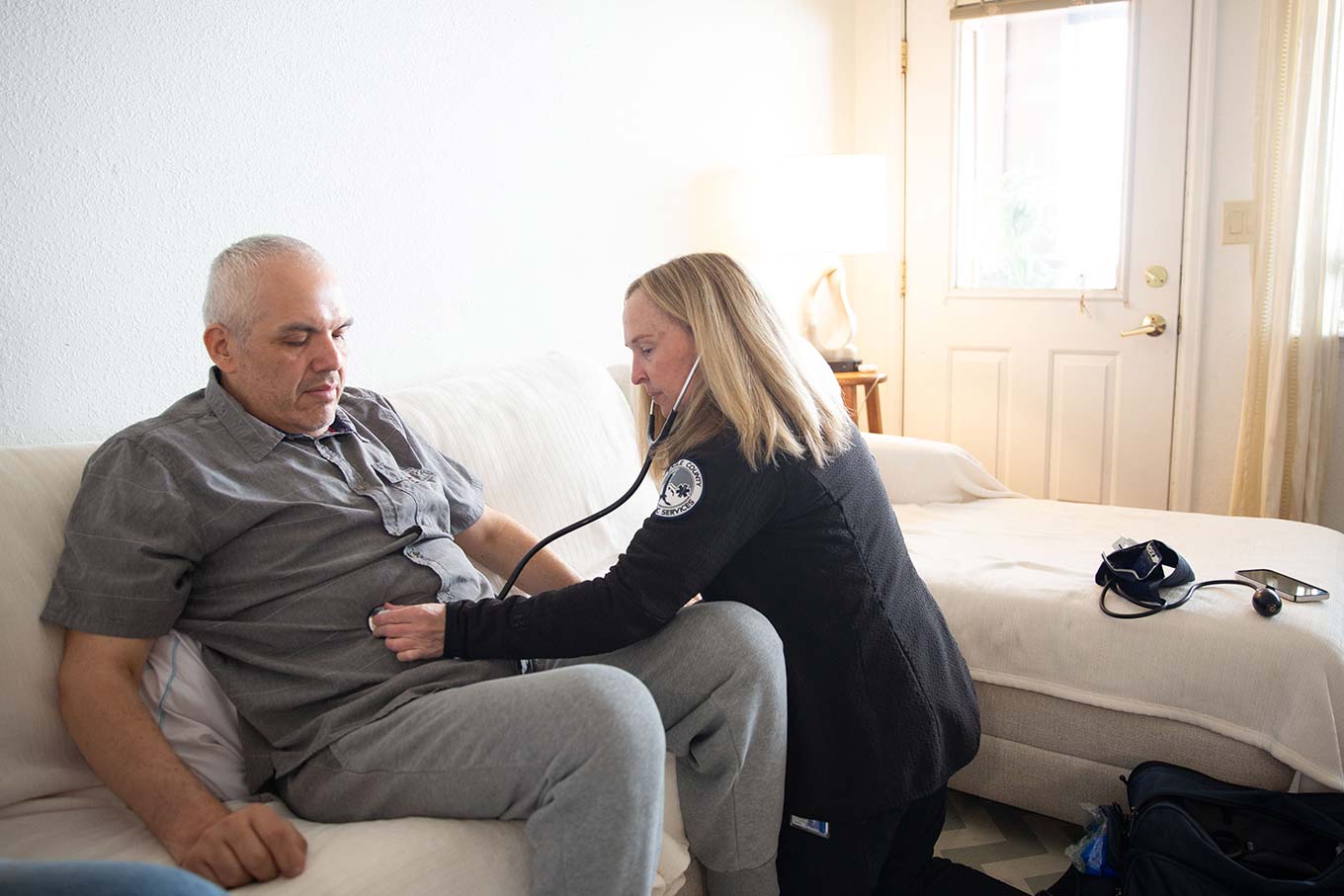
Through occupational therapy at the farm, Behm helps kids with various diagnoses, including autism, Down syndrome, cerebral palsy, attention-deficit/hyperactivity disorder and trauma. Parents and providers say these therapies influence children’s educational and social outcomes. They are especially helpful when kids are not meeting developmental milestones.
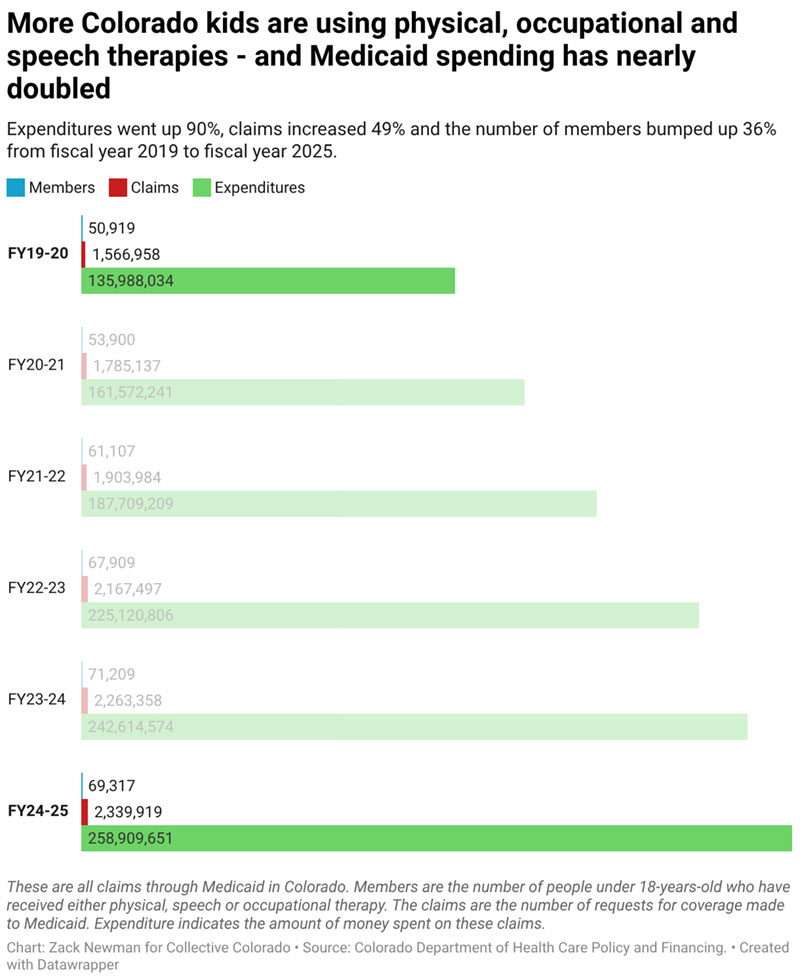
The number of children in Colorado who use Medicaid and received physical, occupational and speech therapy services— working to improve their skills to communicate, learn in a classroom and make friends—in the last five years has increased by 36%. State Medicaid spending, however, has nearly doubled, according to an analysis of Medicaid data from the Colorado Department of Health Care Policy and Financing.
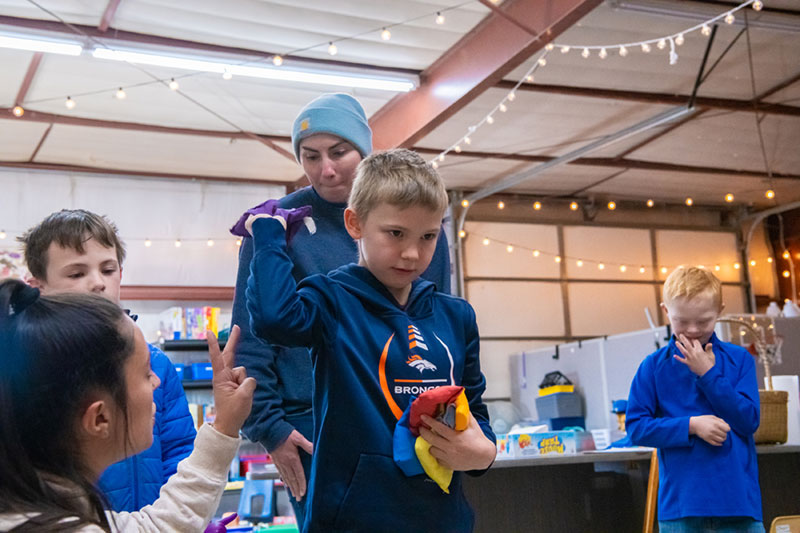
Occupational therapist Gabby Javier holds up two fingers to remind Asa Scheer, 7, of his bean bag toss limit during a group occupational therapy session on Tuesday, Jan. 20, 2026, at Iron Horse Therapeutic Farm outside of old town Timnath, Colo. Photo by Tanya Fabian/Special to The Colorado Trust
The reason spending for these specific services has gone up this much is unclear, but experts say the result is that more kids are accessing the services they need. The increased state spending follows a trend of growing costs for Medicaid in the state budget due to a variety of reasons, including higher prices for medical care and more utilization of services.
But now, lawmakers have slashed reimbursement rates for providers, effective April 1, putting the growing access to physical, occupational and speech therapy services in jeopardy.
Between July 2019 and June 2025, the state spent $1.2 billion on physical, occupational and speech therapies. Spending increased 90% during that same period. The number of Medicaid claims rose by about 49%.
Research shows that these types of therapies can help children close developmental gaps. Occupational therapy can improve cognitive development in young children. Speech therapy can help kids communicate their thoughts and needs more effectively. Physical therapy can improve the fine motor skills of kids with disabilities.
The January therapy session was one of many weekly sessions that Behm hosts at Iron Horse Therapeutic Farm. Four elementary-aged kids gather with occupational therapists on Tuesday mornings to spend an hour learning motor skills, such as handwriting, and social skills, such as interacting with each other. This includes learning to advocate for their own needs, managing big emotions when things don’t go their way and limiting what they share to make space for others in conversations.

Students feed cabbage to a goat during a group occupational therapy session on Tuesday, Jan. 20, 2026, at Iron Horse Therapeutic Farm, outside of old town Timnath, Colo. Photo by Tanya Fabian/Special to The Colorado Trust
“One little boy’s needs are to be able to accept other people’s ideas and to be flexible,” Behm said. “He sees the world very black-and-white. And another is to just sit and attend in a group setting, and another is to find his voice within this group.”
On the docket that morning was a game of Mouse Trap, feeding the goats cabbage and building an obstacle course. The children and members of the therapy team filed into a barn-like building with lights crisscrossing across the ceiling. Shelves brimmed with stacks of games and art supplies, gymnastics mats were tucked away in a corner of the room, and hand-painted artwork decorated the walls.
The boys sat in low chairs as they listened to the plan.
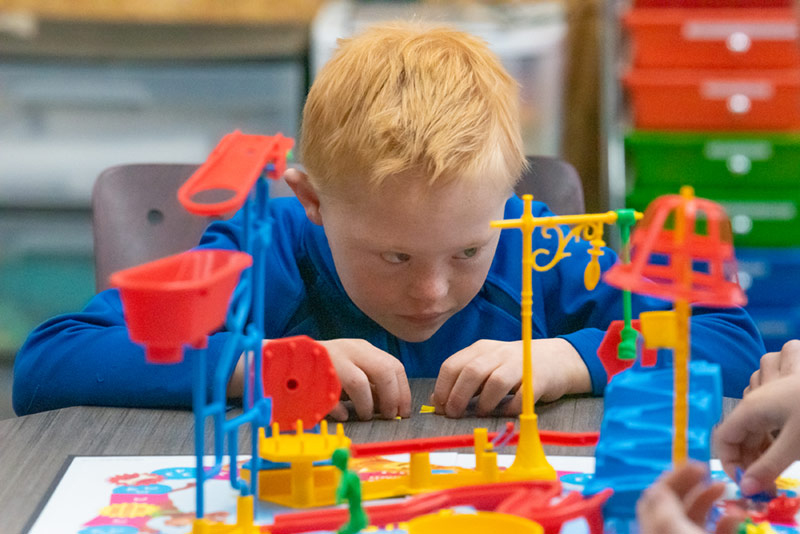
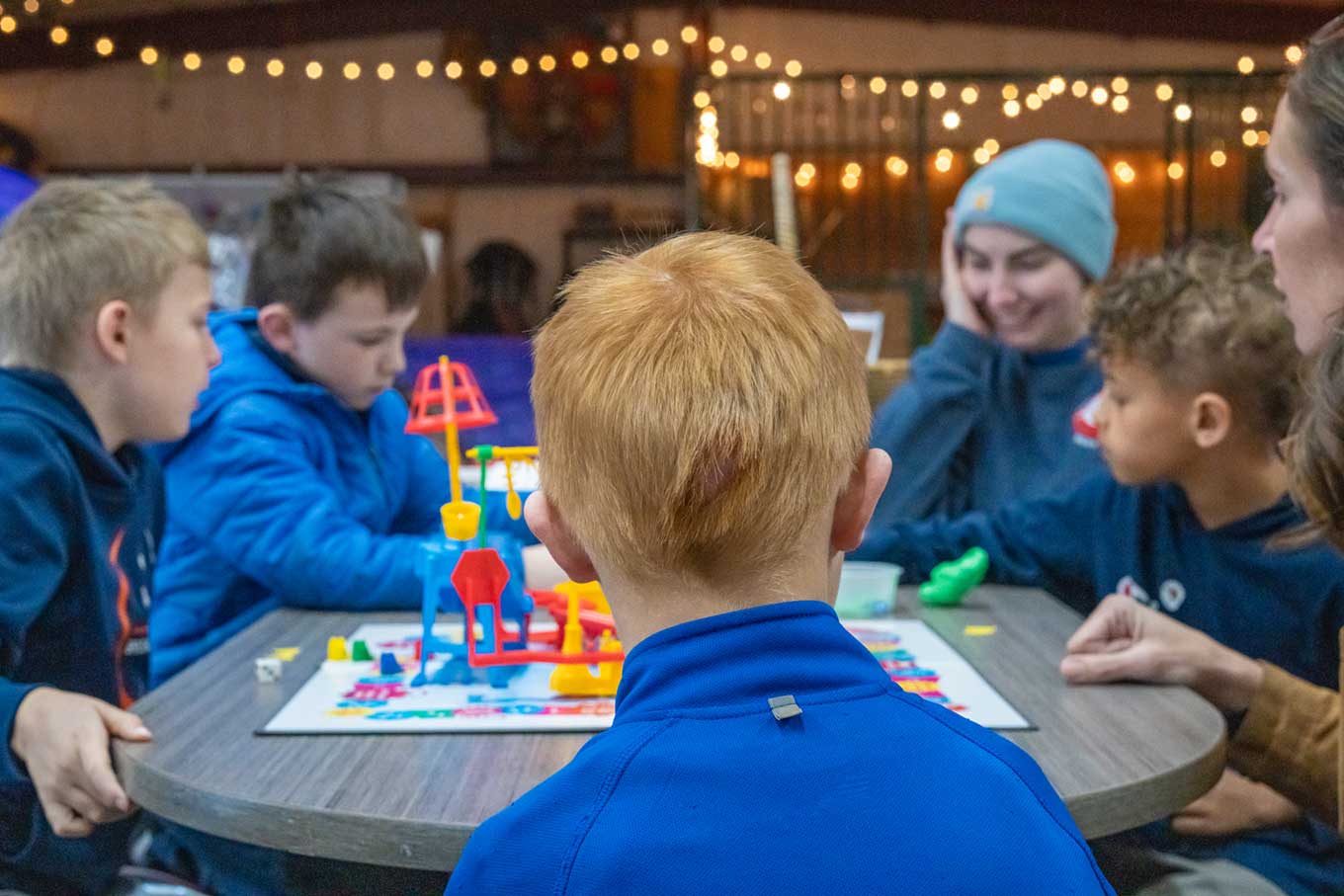
Elijah Blum, 8, concentrates while playing a game of Mouse Trap with other boys and therapists during a group occupational therapy session on Tuesday, Jan. 20, 2026, at Iron Horse Therapeutic Farm just outside of Timnath, Colo. Photo by Tanya Fabian/Special to The Colorado Trust
Asa Scheer, 7, has been working on giving space to the other boys’ ideas. That day, the therapists rewarded him with Mouse Trap after he’d patiently waited for two weeks.
Throughout the course of the game, the kids played rock-paper-scissors to choose who went first, brought each other into the fold by assigning someone to distribute cheese and took turns triggering a complex trap designed to capture “mice.”
Behm said the therapists help the kids learn to play because that is one of their daily occupations.
“You play throughout your whole life, and knowing how to get along in a group and how to advocate for your needs within a group, or how to accept someone else’s ideas within a group, those are lifelong skills that probably some adults should have OT and work on them,” Behm said.
The number of kids accessing PT and OT went up by a third
An analysis of HCPF data found that 32% more kids enrolled in Colorado’s Medicaid program accessed physical and occupational therapy in 2025 than in 2019—up to 41,569 children, from 31,375 in 2019. During that same timeframe, expenditures grew 89% to $145 million by 2025.
That is only about 1% of the estimated $13 billion in total Medicaid spending in Colorado, according to KFF, a health policy research nonprofit. The documented rise in Medicaid spending is notable at a time when lawmakers have voted to cut Medicaid funding for caregivers and disability programs.
Medicaid spending has drawn the attention of state legislators as they dig their way out of a budget hole. Parents and advocates have warned that cuts to these programs will affect the children who benefit from them. The Joint Budget Committee, the powerful legislative body that helps the state balance the budget, recommended that providers be paid at 85% of the Medicare benchmark, effective April 1, to save tens of millions of dollars a year.
“No one is happy making budget reductions, but we are focused on responsibly limiting Medicaid growth to ensure that Medicaid is sustainable and Coloradans have access to the care we need in the future,” Williams said.
Eric Maruyama, a spokesperson for Gov. Jared Polis, wrote that Medicaid spending overall
has increased in Colorado in the proposed budget and that the budget balances “protecting important investments in education and public safety” while “setting Medicaid up for future sustainability.”
Behm wrote in a text message that these cuts will cause problems for her, other small providers and the people they help. “I think most small practices will go under, leaving only the hospital affiliates still in business,” she wrote before the cuts went into effect. “Thousands will lose their therapy team!”

Kyle King, 9, joins his mother Kelly King, and Alison Korecki, another parent, for a hug after a group occupational therapy session on Tuesday, Jan. 20, 2026, at Iron Horse Therapeutic Farm just outside of Timnath, Colo. Photo by Tanya Fabian/Special to The Colorado Trust
Jill Hawks, a licensed speech-language pathologist and president of the Colorado Speech-Language-Hearing Association, wrote in an email that these cuts would likely reduce the number of people who can get care. Providers could choose to stop taking Medicaid patients, and rural hospitals would be forced to operate on thinner margins.
The result, according to Hawks, would be “limited access to care to Medicaid beneficiaries, limited access to skilled and qualified Medicaid providers and longer wait times to get in with skilled Medicaid providers.”
Chris Edmundson, the co-chair of the government affairs committee for the Colorado chapter of the American Physical Therapy Association and a physical therapist with a private practice in Firestone, wrote in an email that these cuts would destabilize the insurance network.
“Everyone’s bracing for catastrophe right now with the Medicaid cuts coming,” Edmundson said.
Some practices with caseloads primarily composed of Medicaid patients will be forced to close, and others will be required to drop insurance carriers with even lower reimbursement rates than Medicaid.
“Colorado will become a desert for children’s rehabilitation services,” Edmundson wrote. “Evidence strongly suggests that neglecting these children will lead to significantly greater expenses for our health care system later (not to mention the lower function and quality of life they will experience as a result).”
Edmundson said he’s not sure why the state data show so much money being spent on these therapies and at a rate that is growing “too rapidly,” especially since Medicaid claims are growing much more slowly than spending.
Even with the spending increase, Edmundson said the physical therapy industry is struggling to retain therapists and make much of a profit. He said he barely broke even last year.
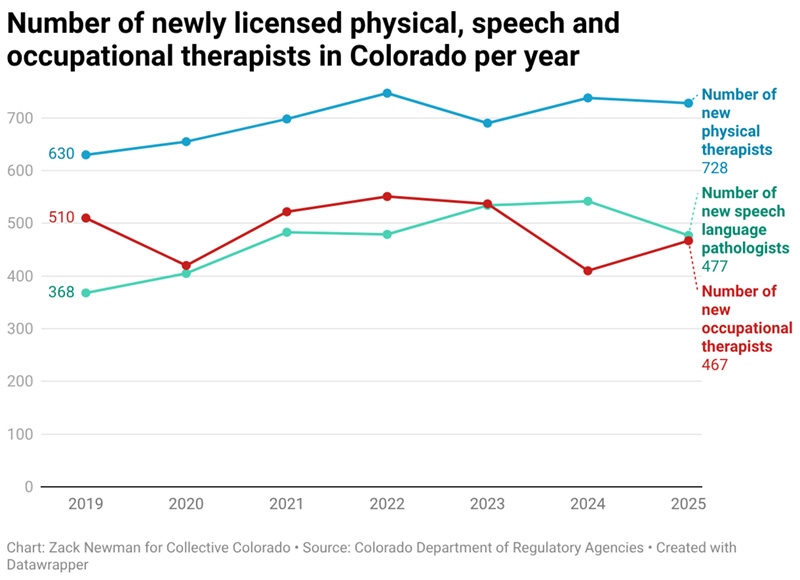
A review of Colorado Department of Regulatory Agencies data showed the state licensed 728 physical therapists in 2025, 16% more than in 2019, when 630 were licensed.
Behm said she is not seeing a steep increase in patients. Many of the families at her practice, she said, are leaving Medicaid and going to commercial insurers outside of Medicaid.
“Seems like our referrals have been relatively steady but no crazy spikes,” Behm said, adding that “as far as spending goes, it’s definitely not coming into the pockets of the providers.”
Statewide Medicaid provider rates had increased about 7.5% across the board from 2019 to 2025, according to HCPF bulletins. Polis canceled an additional 1.6% statewide increase that had been briefly in place for 2025 to 2026 due to budget shortfalls.
HCPF did not return repeated requests for an interview to explain how the money was being spent or what caused the increase in spending. Williams, the spokesperson for HCPF, offered two possibilities via text but did not return other requests for comment.
“My assumption is the difference between the numbers you provided is likely due either to more utilization of services among members or there may have been a rate increase behind the increase in spend,” Williams wrote via text.
But the HCPF data show that claims per 1,000 children have increased by only 8% for speech therapy and 5% for physical and occupational therapy during the same time. Additionally, providers interviewed say they have not seen a significant increase in reimbursement from insurance claims.
Game nights are possible because of occupational therapy
The Tuesday sessions at the farm outside Timnath have made a tremendous difference in their kids’ lives, the boys’ mothers said.
Beth Scheer, Asa’s mom, said her son has autism, struggles with his fine motor skills and communicating in social settings. She said she has noticed significant changes in her son, especially when Asa interacts with kids at their home school co-op and church child care, since they joined in October.
“He’s conversing with them and having conversations, whereas before … he just never did that,” Scheer said. “He just didn’t know how. And he’s talking … so much more with other kids, just telling stories and stuff.”
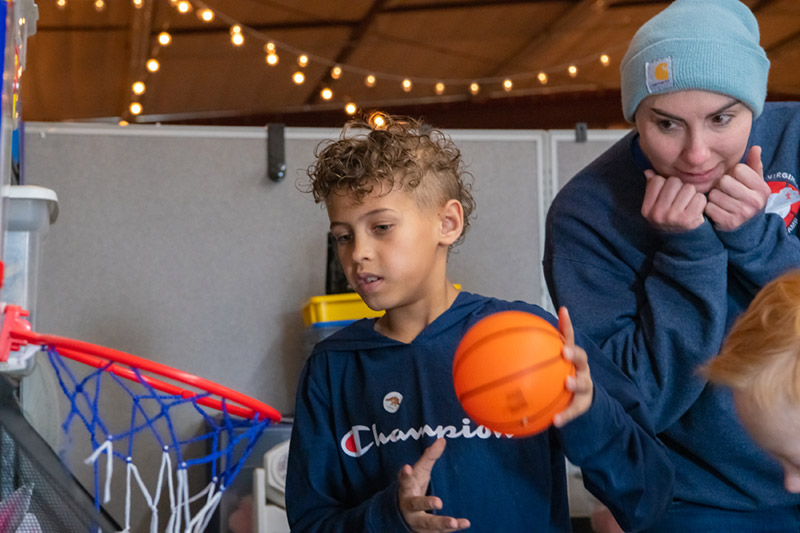
Kyle King, 9, shoots a basket as Sara Hallman, an occupational therapy student in her clinical rotation, watches, during a group occupational therapy session on Tuesday, Jan. 20, 2026, at Iron Horse Therapeutic Farm just outside of Timnath, Colo. Photo by Tanya Fabian/Special to The Colorado Trust
Kelly King, the parent of 9-year-old Kyle, said the therapy helps Kyle learn to work through conflict and competition. King notices the difference in family game nights that are now possible and in basketball games after therapy.
“When they are fresh out of this group, they go out … and they are all taking turns, and they’re all doing all the things that you would hope that any kid would do, but all of these kids struggle in that area,” she said.
King said her family has stayed in Colorado because of the group that Behm created.
“She’s so passionate about making these kids successful down the line, not just today,” she said.
Speech therapy spending also increased
On a Monday afternoon in January, as the bell rang to end the school day, Gabe Subala, 18, walked down the hallway of Dr. Martin Luther King, Jr. Early College in Denver’s Green Valley Ranch neighborhood. The senior lugged a Nintendo Switch and a large sky-blue water bottle up to his esports coach’s classroom to practice playing Super Smash Bros.
Students participate in esports through video games. It is a billion-dollar industry that attracts students through college and professionally.
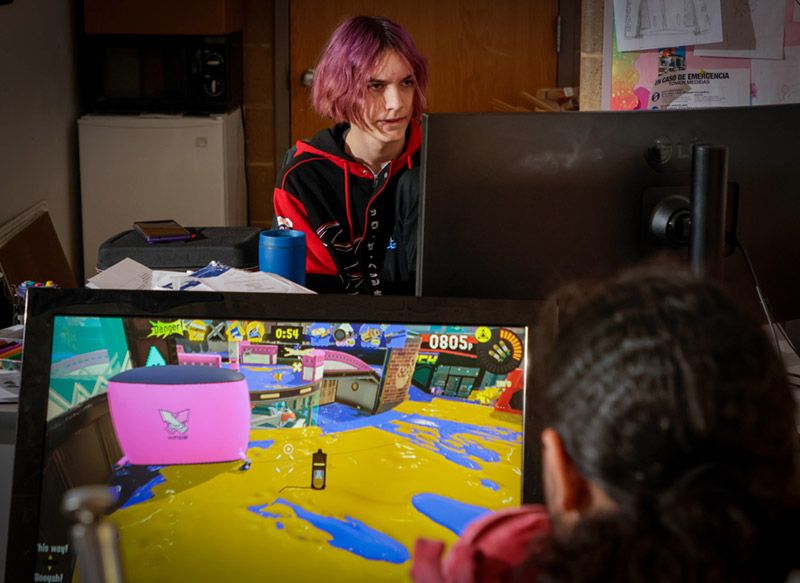
Gabe Subala, 18, competes with his esports team after school on Tuesday, Feb. 10, 2026, at Martin Luther King Early College in northeast Denver, Colo., during a match of “Splatoon 3” against Chatfield High School. Photo by Joe Mahoney/Special to The Colorado Trust
Subala has purple hair, and that day, was carrying a grey Subaru backpack and wearing a black, red and white jacket with the video game character “Shadow” on it. Shadow is an anti-hero in the “Sonic the Hedgehog” universe.
“I kind of just relate to him a little bit,” Subala said. “He might seem a little bit dark and broody on the outside, but he has a heart inside. He’s definitely good inside, and he always tries to do the right thing, no matter what people say.”
Heaven Subala, Gabe’s mom, said her son struggles with a pragmatic language delay and autism. That makes it difficult for him to talk with people and take turns in conversation.
“It’s taken a really long time to get where we are right now. But I don’t think we would get here if it weren’t for all of the programs and services that he’s had that have helped. … I don’t have enough words for how much it’s benefited our family.”
Heaven Subala said her son practiced social situations through role play. This prepared him for interactions and helped him understand how to better participate. Speech and occupational therapists have worked with him since he was 1 year old.
Gabe Subala is one of thousands of kids who have benefited from speech therapy. The HCPF Medicaid data show that spending on speech therapy for children increased by 92% to $113 million by 2025. However, the number of kids using the services grew more slowly, increasing by 42% over five years.
There are more speech therapists in Colorado to help people struggling with issues like Subala’s. There were 477 speech-language pathologist licenses added in 2025, up from 368 in 2019, according to Colorado Department of Regulatory Agencies data.
Subala said he has been going to therapy for years and that it’s made a huge difference in his life.
“It’s definitely helped me to just be more active [with] the people around me and not just be, kind of just sitting there,” he said.
Subala said speech therapy gave him the confidence to join the high school’s esports team and become co-manager.
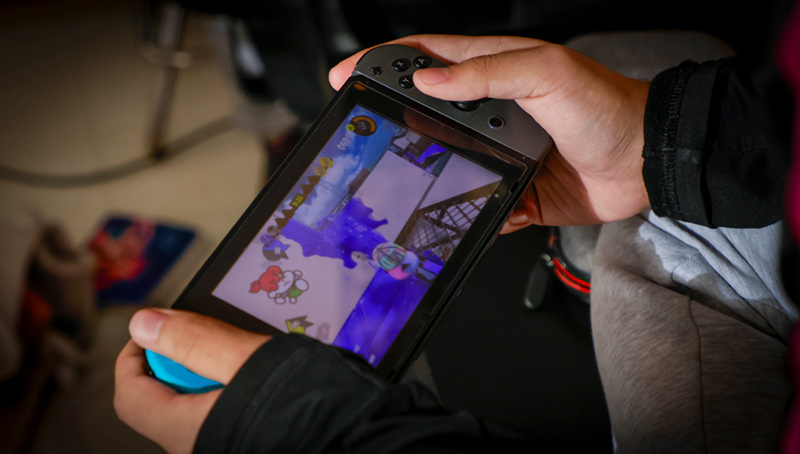
A Martin Luther King Early College esports team member plays on his Nintendo Switch on Tuesday, Feb. 10, 2026. Photo by Joe Mahoney/Special to The Colorado Trust
Heaven Subala said her son has been able to spend time with other kids who have similar interests and make friends through esports. He wants to go to prom, which is something he did not have an interest in before, she added.
“He’s really just thriving right now,” Heaven Subala said. “My husband and I are just absolutely over the moon with how well he’s doing. … We didn’t know if we were ever going to see this.”
Her main advice to other parents, she said, is to meet their kids where they are and not to give up.
“It’s real easy to get lost in those fears and those bad thoughts and those negative emotions and despair, but none of that has to be real,” she said. “We really can work hard to provide our children with the tools necessary to grow and to be where they need to be, and these diagnoses are also not as scary as they seem.”