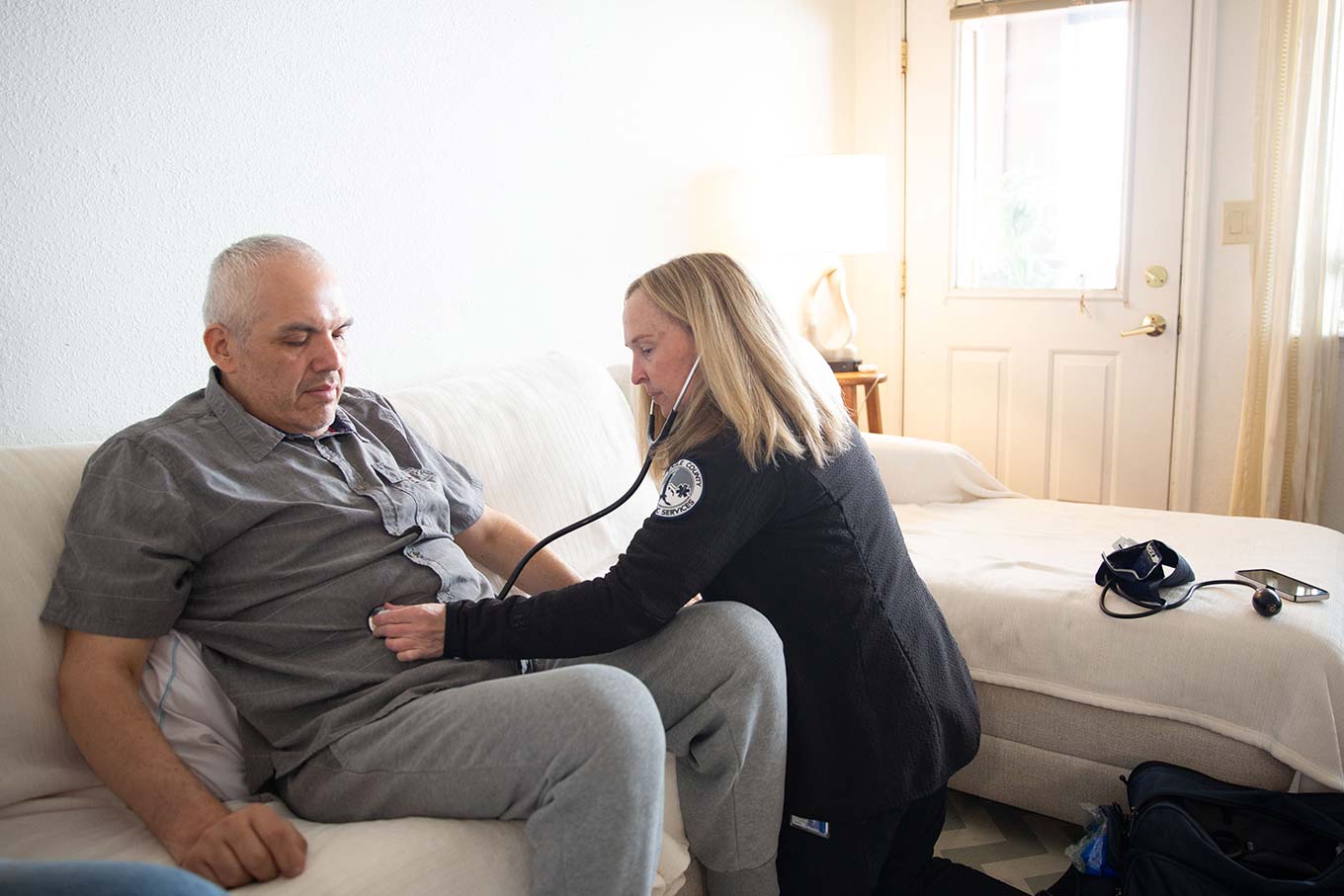
Abraham Torres Razo smiles as he sits on his living room couch in his Nike sweats and a Mexican soccer jersey. Despite what he’s been through over the past three weeks, he’s pleased to see his nurse arrive at his door on an early April morning.
The former cook was admitted to Vail Health in late March with abdominal pain. He ended up having two surgeries, including an ostomy. While he was there, the 46-year-old suffered a stroke.
As Torres Razo’s medical team prepared him for discharge, they brought in Donna Frimston, a home health nurse with Eagle County Paramedic Services (ECPS). She now visits Torres Razo twice a week at the two-bedroom apartment in Avon where he lives with his wife, three kids, two cats and a dog. Frimston focuses on ostomy and wound care, monitoring Torres Razo’s diabetes, getting him comfortable with his new insulin injections and educating him on lifestyle changes that can help him better manage his chronic conditions.
“I just kind of gave up on myself for a bit,” Torres Razo said, but “I’m soaking in all the advice so I can get my health back to where it’s supposed to be.”
ECPS launched Eagle Valley Home Health (EVHH) in October, following the closure in 2023 of the valley’s only home health provider, a private company with the same name. Home health is a skilled nursing service designed to support recovery, manage chronic conditions and help prevent hospitalizations for people who are homebound because it’s difficult or dangerous for them to leave their homes. EVHH services are available to anyone who fits those parameters and has a doctor’s order, but they are primarily for an older population enrolled in Medicaid or people who are under- or uninsured.
“We recognized there were members of our community who were struggling to access appropriate services,” said Brandon Daruna, CEO of ECPS. “Home health is not traditionally our area of expertise, so this was not a hasty decision—we spent considerable time researching the model, understanding the regulatory requirements and assessing whether we could help close some of those gaps.”
EVHH works in tandem with ECPS’s community paramedicine program, which started in 2010 to serve frequent 911 users and underserved community members with acute care, medication management and behavioral health crisis response. These trained paramedics similarly fill holes in the system and help ease the burden on emergency services. State legislation may further expand similar initiatives by broadening the types of care that emergency services can bill for reimbursement.
ECPS is a health service district, so it’s structured like a local government, but it’s tasked specifically with providing community-based health care services. All ECPS services are subsidized via an Eagle County mill levy, patient revenues and financial support from community partners, including Vail Health and Eagle County government.
Without these types of community health programs, Torres Razo would have to make more frequent visits to a doctor or risk getting readmitted to the hospital, both of which are time-consuming and costly.
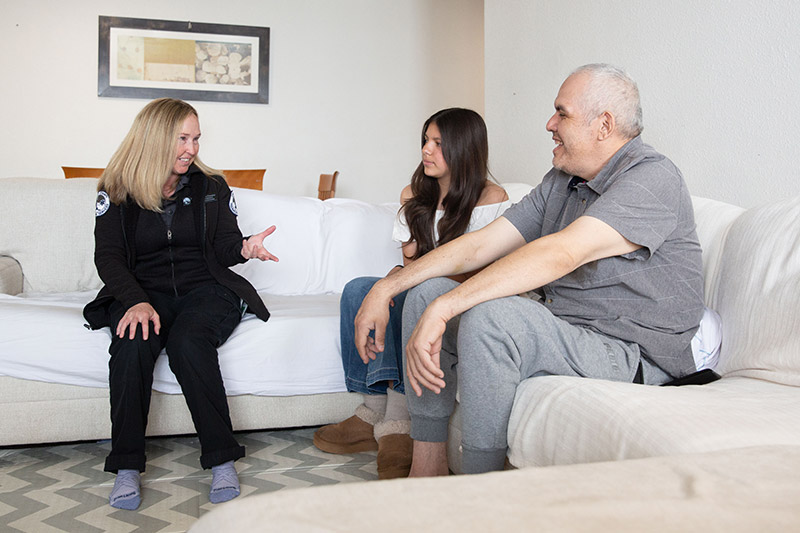
Home health nurse Donna Frimston of Eagle Valley Home Health and patient Abraham Torres Razo review notes about Torres Razo’s care on Friday, April 17, 2026, at his home in Avon, Colo. Torres Razo’s daughter, Cesia Torres (middle), listens to the conversation. Photo by Luna Anna Archey/Special to The Colorado Trust
“It was a relief for me to have someone by my side to help me [when I came home], teach me how to manage everything,” Torres Razo said. “It took some weight out of my shoulders when they told me they were going to help me.”
Torres Razo lives centrally in the Vail Valley, but EVHH serves all of Eagle County, with most patients residing along the Interstate 70 corridor. At least one of Frimston’s patients lives more than an hour’s drive away.
Home health care is not a new concept. In 1965, home care was incorporated into Medicare, Medicaid and the Older Americans Act under the assumption that it would reduce hospital visits and lower health care costs. Today, the Colorado Department of Public Health and Environment regulates and licenses home health services in the state.
Home health practitioners can aid with wound care, injections, medication management, physical therapy, occupational therapy, patient and caregiver education and social service resource connections, among other services. (EVHH does not offer physical or occupational therapy but is working to set up the former through a third-party provider this year.) It’s not concierge medicine. Rather, a health care provider, such as a physician or nurse practitioner, must order home health, and the service is meant to be temporary—not to replace primary care.
“By reducing admissions to the hospital, we save the health care system as a whole a very large sum of money,” said Phil Goldsmith, president of APTA Home Health, an academy of the American Physical Therapy Association. “Additionally, we keep people in their homes and out of skilled nursing facilities and other long-term care environments, which saves their families money and improves quality of life.”
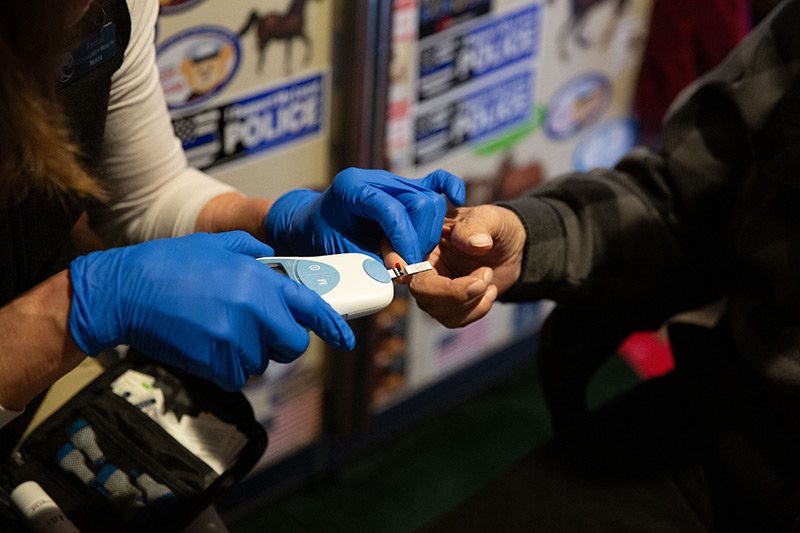
Eagle Valley Home Health Nurse Rachel Van Sloun tests a patient’s blood sugar on Friday, April 17, 2026, at his home in Dotsero, Colo. Photo by Luna Anna Archey/Special to The Colorado Trust
A 2025 evaluation of national home health expenditures found that home health users cost Medicare 34% to 43% less than those who didn’t access those services. A review of a community paramedicine program in Massachusetts found that it saved the local health care system nearly $2,000 per case and $6 million over 12 months.
Home health programs exist across the state and the country. In Colorado, rural locales such as Delta, Trinidad and the Four Corners region offer these services. However, the National Alliance for Care at Home reports that half of all U.S. counties lost at least one home health agency from 2020-24, largely due to reimbursement rates that make it financially difficult to maintain these businesses. Northwest Colorado Health recently revealed that it’s losing around $1 million per year operating its home health and hospice services in Routt and Moffat counties.
“We are a unicorn,” said ECPS Community Health Manager Ryan Bush of the program’s financial stability. EVHH can share resources with the paramedics’ other programs, but it’s not expected to be a money-making endeavor as it would be for a private company.
Once Medicare and Medicaid reimbursements are set up, they will help further offset some of the costs, but the program is currently “providing a limited scope of services,” Daruna, the CEO, said.
EVHH currently employs two nurses: Frimston, who works full time, and Rachel Van Sloun, who works part time. They maintain a total caseload of about 10 patients, who they see during scheduled weekday appointments—around two to four per day, depending on drive times.
Approximately 30 patients have received home health care through EVHH so far. Around 70% of them are older than 60. Some are supported for just a handful of visits, while others receive aid for months. ECPS hopes to hire additional nurses in the future to respond to what it says is a consistent community need.
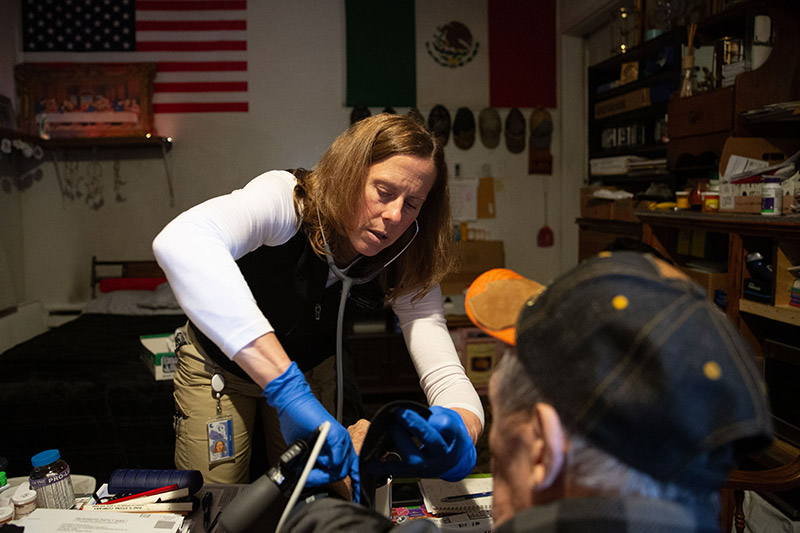
Eagle Valley Home Health Nurse Rachel Van Sloun checks a patient’s vitals on Friday, April 17, 2026, at his home in Dotsero, Colo. Photo by Luna Anna Archey/Special to The Colorado Trust
ECPS also employs a case coordinator to help patients connect with appropriate social services, such as food, housing and transportation.
“We don’t outright provide those resources, but we understand that you can’t heal if you don’t have these things,” Bush said. “We can overlap the right resource at the right time for the patient.”
As the population rapidly ages, home health services may become even more critical. Between 2015 and 2050, the World Health Organization estimates the proportion of people 60 or older will jump from 12% to 22%. According to the Colorado Rural Health Center, 20% of the state’s rural population was 65 or older in 2023, and Eagle County, which loosely stretches from Vail to Dotsero, expects its population of residents 65 and older to almost double by 2035. Its Aging Well Roadmap includes goals that support people aging in place.
Van Sloun, the home health nurse, sees several older patients. One, an 80-year-old man who lives in a converted garage in Dotsero, was previously part of the community paramedicine program. After some recent cardiac issues sent him to the hospital, Van Sloun began visiting him weekly. She performs head-to-toe evaluations and ensures he understands his complex medication regimen, at times counting out individual tablets from nearly a dozen different medications into a day-and-night pill box.
“It gets super complex,” she said during the drive back to the paramedics’ station. “I help [people] navigate and make the best of everything.”
House Bill 26-1069, which was signed into law on June 3, will, among other changes, allow emergency services to be paid for treating patients on scene when appropriate, rather than only after transporting patients to emergency rooms. ECPS said this modification will make it easier to expand the treatment-in-place model, which can be particularly beneficial in rural systems where traditional health care facilities are more limited. In a news release, Colorado Senate Democrats estimated the bill would save the state $2.1 million in the 2026-27 fiscal year and close to $5 million in future years.
The home health program in Eagle County benefited Kevin Kanne after he stepped on something at his home in Gypsum about a year ago. A severe infection followed, and doctors had to remove one of his toes from his left foot. When he was discharged from the hospital weeks later, he still couldn’t put weight on his recovering foot.
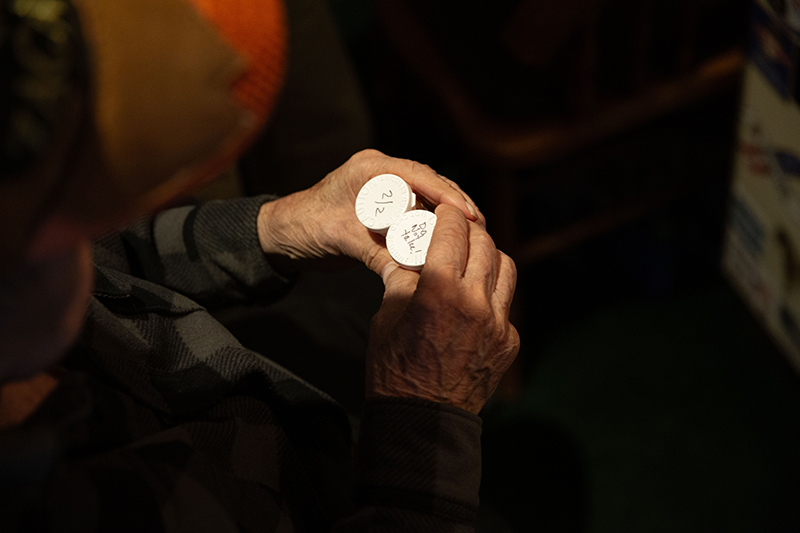
Rachel Van Sloun, a home health nurse with Eagle Valley Home Health, helps a patient with his medication schedule on Friday, April 17, 2026, at his home in Dotsero, Colo. Photo by Lunna Anna Archey/Special to The Colorado Trust
Frimston began visiting Kanne once a week in September. She dresses his wound, ensures his medications are in order and accessible, and checks on his diabetes and cardiac issues. She’s connected with Kanne’s doctors and follows their care orders.
“It’s a big deal,” said Kanne, 68. “It’s a tremendous service here in the valley to have someone here to do that, to dress wounds, to take care of me.”
It feels good, he said, to know someone is looking out for him. “They’re concerned about your whole health package. … They know resources that I don’t know,” he said. “They’re my neighbors—they’re not just professional [nurses].”
Without Frimston’s help, Kanne would have to drive twice weekly to the wound clinic in Glenwood Springs—25 miles away and through a canyon that’s dicey in adverse weather. Surging gas prices add another challenge. Thanks to Frimston, he only has to go to the clinic once a week.
“He wasn’t compliant because he couldn’t get in his car and didn’t really have that support at the time to take him to his appointments,” Frimston said of those early weeks. But his ability to manage his care has vastly improved.
It helps that Kanne doesn’t have to pay for the services out of pocket. While EVHH is working with Medicare and Medicaid to obtain certification for reimbursement—an application process that can take months—the program is not currently billing for its services. The program will also eventually accept commercial insurance.
“Very few other people have this luxury,” Bush said. “We can shoulder the entire cost even if we don’t get a single penny back.” (On May 13, the federal government announced a six-month “moratorium on new Medicare enrollments from home health care and hospice providers,” so this process will take even longer than anticipated.)
“Health care reimbursement is backward: We have to provide care first and only find out later if we’ll get paid,” he added. But as a tax-supported organization, EVHH can “afford to launch a home health program, staff it and start seeing patients while we wait for reimbursement to catch up. In other words, the community’s tax support lets us fill a real gap in care now, instead of waiting for the funding system to catch up later.”
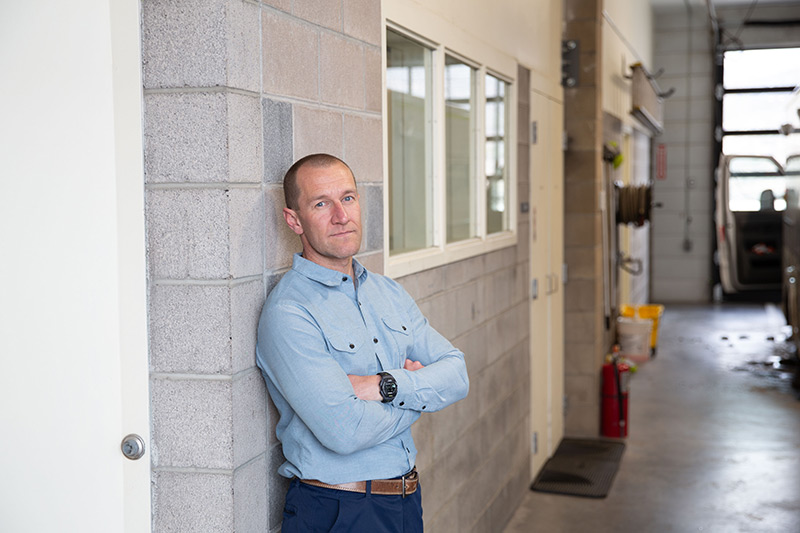
Ryan Bush, Eagle County Paramedic Services community health manager, poses for a photo on Friday, April 17, 2026, at a paramedic services station in Edwards, Colo. Photo by Luna Anna Archey/Special to The Colorado Trust
Bush said it’s worth it to ECPS to make the funding work because of the impact on patient outcomes. A 2023 analysis found that patients who were referred to but never received home health care after hospitalizations saw readmission rates increase by 35%, mortality rates surge by 43%, emergency department use rise by 16% and overall spending increase by more than 5%.
“We are trying to be a stopgap measure,” Bush said. “We’re working with a care team to care for these patients, just in their home, and that’s going to be a better model for their healing.”