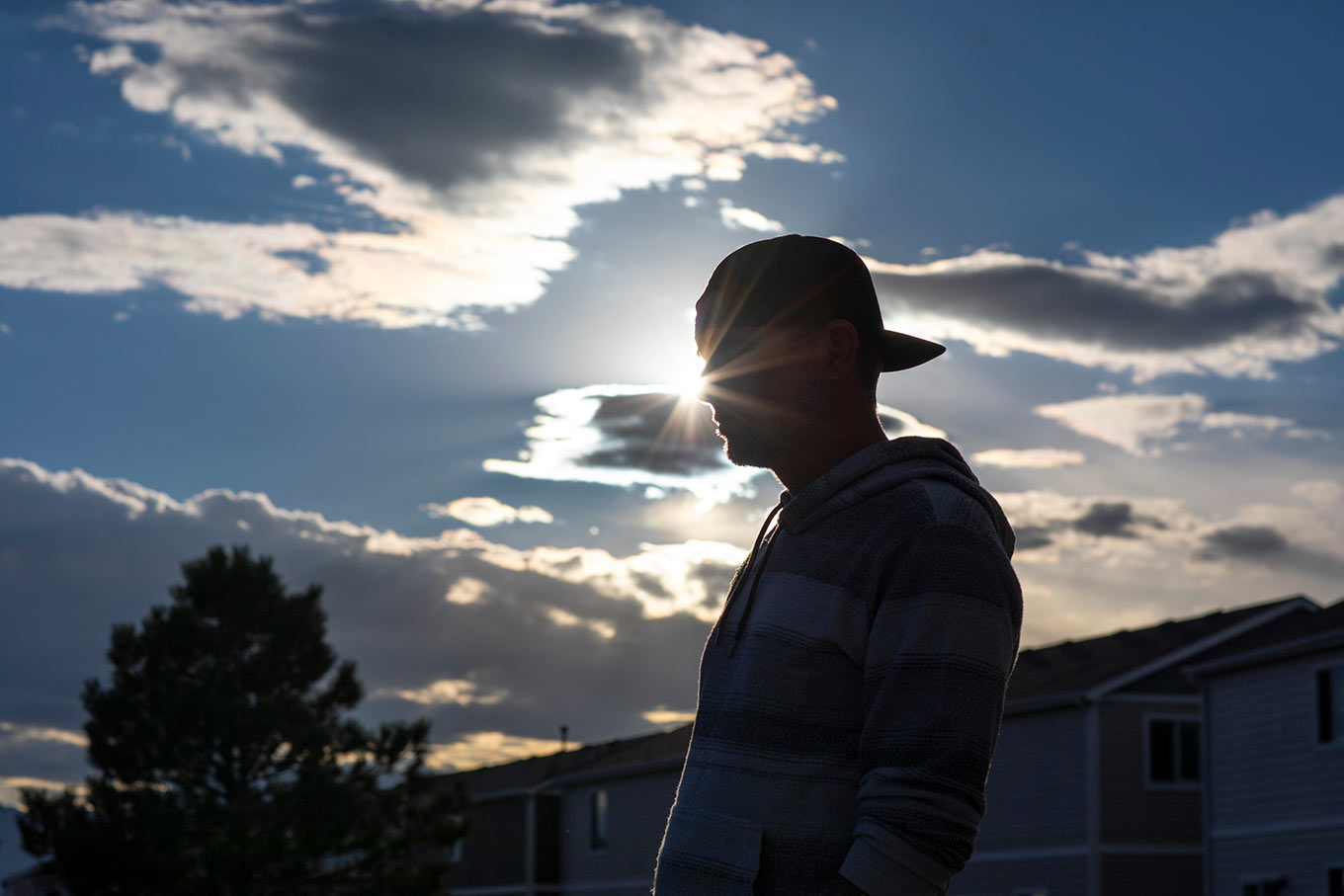
Madison Stout noticed last October that her mood had dipped. She felt fatigued and started sleeping and eating more than usual. Her motivation slipped at work.
“I went into a really big depression spike,” the 30-year-old Westminster resident said. “I definitely felt lonely, and I didn’t want to do anything.”
After talking with her therapist, Stout realized her mental state was a result of what was going on physically: Her prosthetic leg wasn’t working properly, which triggered back pain that prevented her from going to the gym, a source of community and one of her usual stress-relieving outlets. Stout then gained weight and felt “sluggish and slow,” she said. And that quashed her desire to socialize, making the self-described extrovert feel isolated.
Stout, who sums up her disability as a “limb difference,” was born without the tibia (shin bone) in her right leg and the ulna (forearm bone) in her right arm. She also has severe scoliosis, underdeveloped ribs, and she was born with only one kidney.
Stout’s recent bout of isolation underscores a broader trend: Loneliness, a growing public health concern for Americans, disproportionately affects people with disabilities.
Data from the 2025 Colorado Health Access Survey (CHAS), a biannual report by the Colorado Health Institute, found that nearly half (47.4%) of Coloradans with disabilities reported feeling lonely often or always, more than double the statewide average of 21.7%. The 2025 report was the first time the survey, which began in 2009 (and has been funded by The Colorado Trust for most of its existence), measured loneliness.
“Even amidst the growing body of research surrounding loneliness and its adverse health effects, we still have not learned or heard as much about how the loneliness epidemic is impacting people with disabilities,” said Dr. Maggie Salinger, an assistant professor of medicine at Brown University. When the U.S. Surgeon General published an 82-page advisory in 2023 on the nation’s loneliness epidemic, people with disabilities were mentioned just once.
Salinger co-authored a 2025 analysis examining survey data from two national samples of more than 38,000 working-age adults with disabilities. The survey asked respondents how often they felt a lack of companionship, left out or isolated. Two-thirds of respondents reported often experiencing severe loneliness.
“It’s not surprising that both Coloradans and Americans [with disabilities] feel more lonely than those without disabilities,” Stout said. “Based on my own experience with my friends and my disabled community, it has to do with access.”
More than 1 in 4 Americans live with a disability, according to the CDC. That number is likely an undercount, said Mia Ives-Rublee, senior director for the Disability Justice Initiative at the Washington, D.C.-based Center for American Progress. That’s because many people don’t identify as having a disability due to social stigma, but they qualify as having one under the Americans with Disabilities Act, which defines disability more broadly than the CDC.
A confluence of factors makes this population more likely to experience loneliness. People with disabilities have higher unemployment rates than their peers without disabilities. The Bureau of Labor Statistics found that 9.5% of people with a disability of working age were unemployed in July 2026—more than double the rate of people without a disability (4.2%).
Because the workplace is a common setting where people have social opportunities, the high unemployment rate among people with disabilities means they have fewer chances to form meaningful connections. They are also more likely to have lower incomes, limiting their ability to afford social activities, said Lindsey Whittington, a Colorado Health Institute data and analysis manager.
Research shows people with intellectual and developmental disabilities typically have average social networks of about 22 people, compared to over 100 in the general population.
Living with a disability also affects other health measures associated with loneliness. According to the CHAS, Coloradans with disabilities were more likely to struggle to afford housing, food and health care than those without disabilities—all factors that could lead to “feeling isolated, lacking companionship and feeling left out,” said Chrissy Esposito, a Colorado Health Institute research and programs manager.
Loneliness is linked with a slew of negative health consequences, including increased risk of heart disease, stroke, type 2 diabetes, dementia, depression, anxiety, suicide, self-harm and early death, according to the CDC.
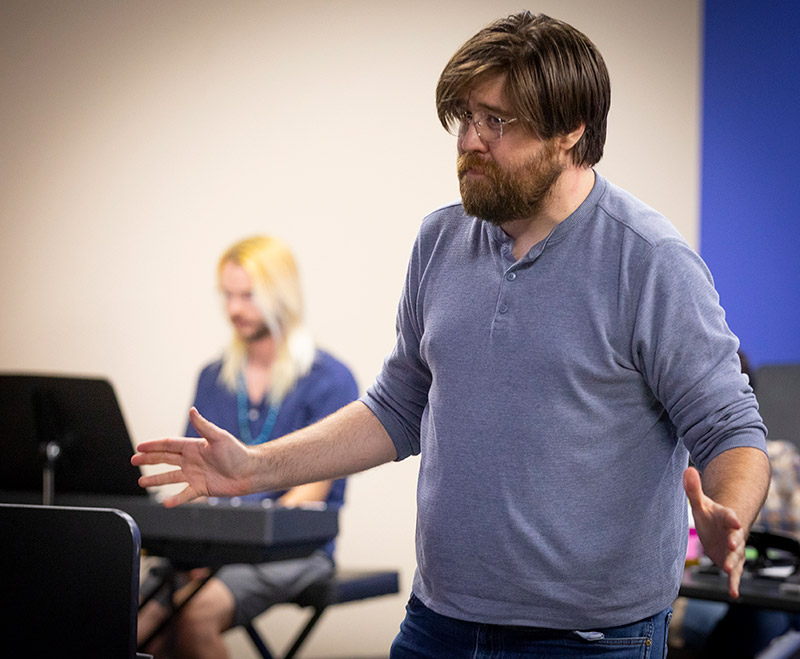
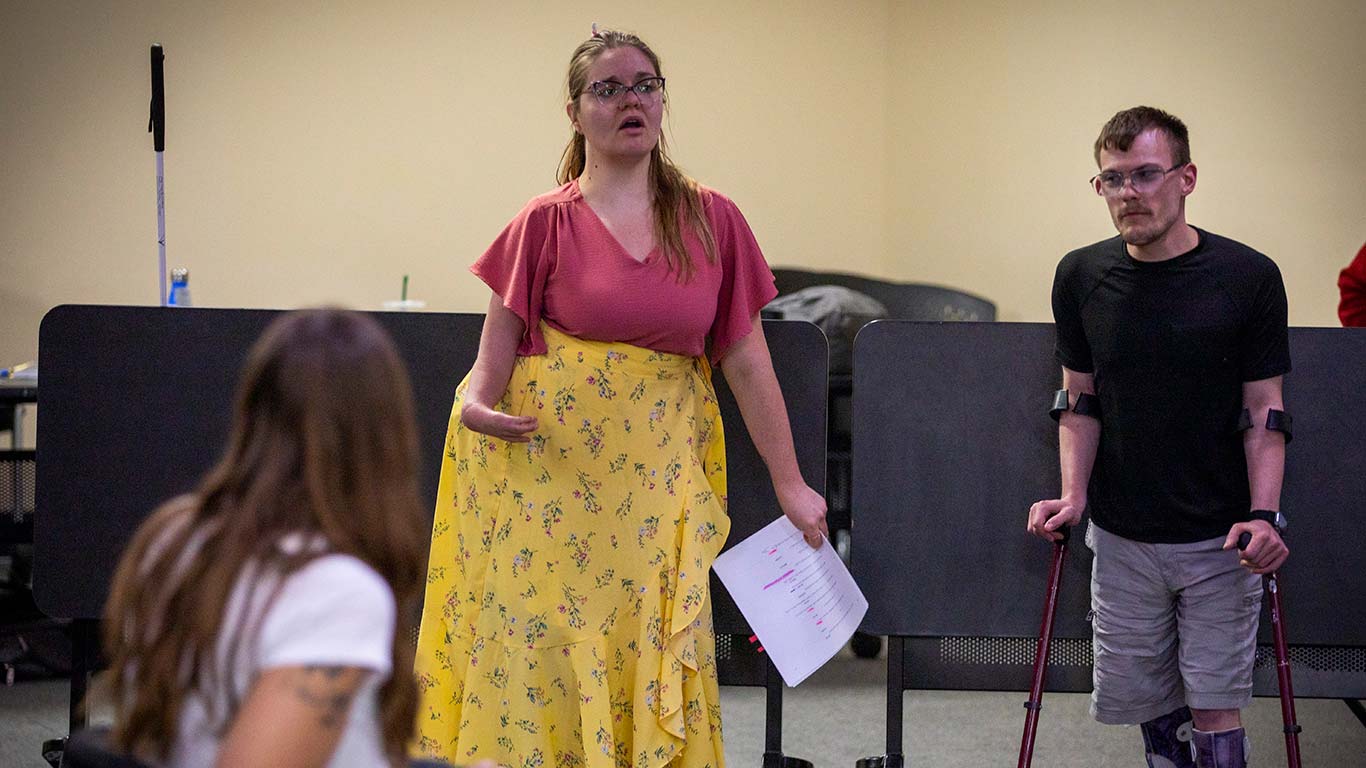
Phamaly Theatre Company actor Toby Yount rehearses at the Tramway Nonprofit Center in Denver on Wednesday, July 15, 2026. Yount said he met new friends and his partner through the group, and Phamaly helped him accept his disability after years of pretending it didn’t exist. Photo by Joe Mahoney/Special to The Colorado Trust
Toby Yount, a 35-year-old Glendale resident living with disabilities, works part time as an actor and comedy instructor. Yount said he is looking for additional employment to help cover his living expenses.
“I’ve always had a hard time finding work for a variety of reasons, but I definitely would attribute my disability being a big part of it,” said Yount, who has autism, bipolar II disorder and other health issues.
Yount said he often struggles to adapt to the work culture, having difficulty understanding and navigating workplace politics due to his autism.
“I’ve had bosses in the past, where when I’m asking questions, they take it as I’m questioning their authority. When, in reality, it’s more like I didn’t understand and wanted more clarification on specific tasks,” he said.
Yount doesn’t have a car and relies on public transportation or ride shares. This limits his mobility and the jobs he can apply for, he said.
“I feel lonely—I think everyone does—and I definitely feel isolated,” said Yount. He thinks the biggest contributing factor to that is being underemployed, which makes it tough for him to afford social activities.
But even when gainfully employed, people with disabilities can face obstacles in the workplace that increase loneliness. People with chronic illnesses or lowered immune systems often have to find remote jobs, which isolates them from their co-workers, Ives-Rublee said. And when people do work in an office, many activities designed to build community are often inaccessible. For example, Ives-Rublee’s workplace has a softball team that she cannot participate in as a wheelchair user.
Limitations in community design can also exacerbate exclusion. Craig Towler, public policy and advocacy director at the Center for People With Disabilities in Boulder, uses a wheelchair, and he said it took years and a lot of grant funding requests to make his home accessible by adding ramps, widening doorways and installing a stair lift.
“But that only makes my home accessible inside,” he said. “If my neighbor down the block is having a neighborhood party at their house, I can’t go to that.”
Then there’s the common misconception that people with disabilities are “always people with need, and not people that can give and do and contribute,” said Julie Reiskin, co-executive director of the Colorado Cross-Disability Coalition, a disability rights advocacy organization (and past Colorado Trust grantee). This prevents them from fully integrating with the rest of society, she said.
When the COVID-19 pandemic began, Reiskin said reporters kept calling her to ask what the disability community needed. While there were legitimate needs, Reiskin emphasized that people with disabilities had a lot to contribute, too, including knowing how to live in isolation and advice for coping with a sudden drop in income.
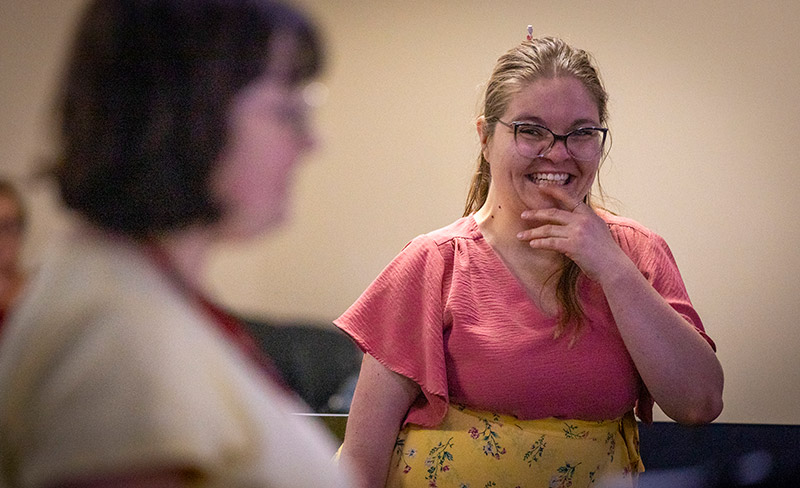
Phamaly Theatre Company actor Madison Stout smiles during a rehearsal at the Tramway Nonprofit Center in Denver on Wednesday, July 15, 2026. Stout, who was born with only one bone in her right forearm and right leg, experienced a “big depression spike” in the fall of 2025 after realizing her prosthetic leg wasn’t working properly, which triggered back pain that kept her isolated from her typical activities and community. Photo by Joe Mahoney/Special to The Colorado Trust
Growing up, Stout didn’t have close friends who had disabilities that she knew about. So, she felt like no one understood her experiences. It wasn’t until Stout joined Phamaly Theatre Company, a Denver-based professional theater troupe for people with disabilities, that she found “freedom from knowing you’re not alone.”
Yount, who also acts with Phamaly, met new friends and his partner through the group, and he said it helped him accept his disability after years of pretending it didn’t exist.
It made him realize, he said, that “it’s not that big of a deal that I have sound sensitivity, and that it’s fine that I don’t do eye contact that much, or that maybe I need to have time to assess and get used to my surroundings.” That allowed him to be more authentic, which in turn makes it easier for him to form connections, Yount said.
Recent actions by the federal government—including funding cuts and policy changes to disability programs—are further increasing loneliness, according to Ives-Rublee. As of summer 2026, Congress was considering cuts to infrastructure support funding, hindering efforts to make communities and transportation more accessible. The Department of Health and Human Services fired more than half the staff at the Administration for Community Living, a federal agency that provides much of the funding for and monitoring of services that benefit people with disabilities. And the 2025 One Big Beautiful Bill Act included cuts to SNAP and Medicaid, two programs that people with disabilities disproportionately rely on.
“We’re looking at multiple layers of a national administration that is literally cutting all of the supports and bridges that would help disabled people remain in the community and connect with people,” Ives-Rublee said.
There’s no simple solution to the loneliness epidemic. But various groups in Colorado are working to bolster inclusion for those with disabilities. The Colorado Developmental Disabilities Council is funding a project with PEAK Parent Center, a Colorado Springs-based nonprofit, to help youth with intellectual and developmental disabilities cultivate and maintain community as they transition into adulthood. The Center for People With Disabilities is providing disability etiquette training sessions that teach people without disabilities how to interact respectfully with those who do have disabilities.
The Colorado Disability Opportunity Office, a state-run organization established in 2024, is facilitating Colorado’s first comprehensive statewide disability needs assessment, which will examine disparities in loneliness, said director Danny Combs.
Beyond big-picture policy changes, an important part of combating loneliness “is really about changing the narrative about what disability is,” Reiskin said. “That it’s not a tragedy; it’s a natural part of the human experience.”