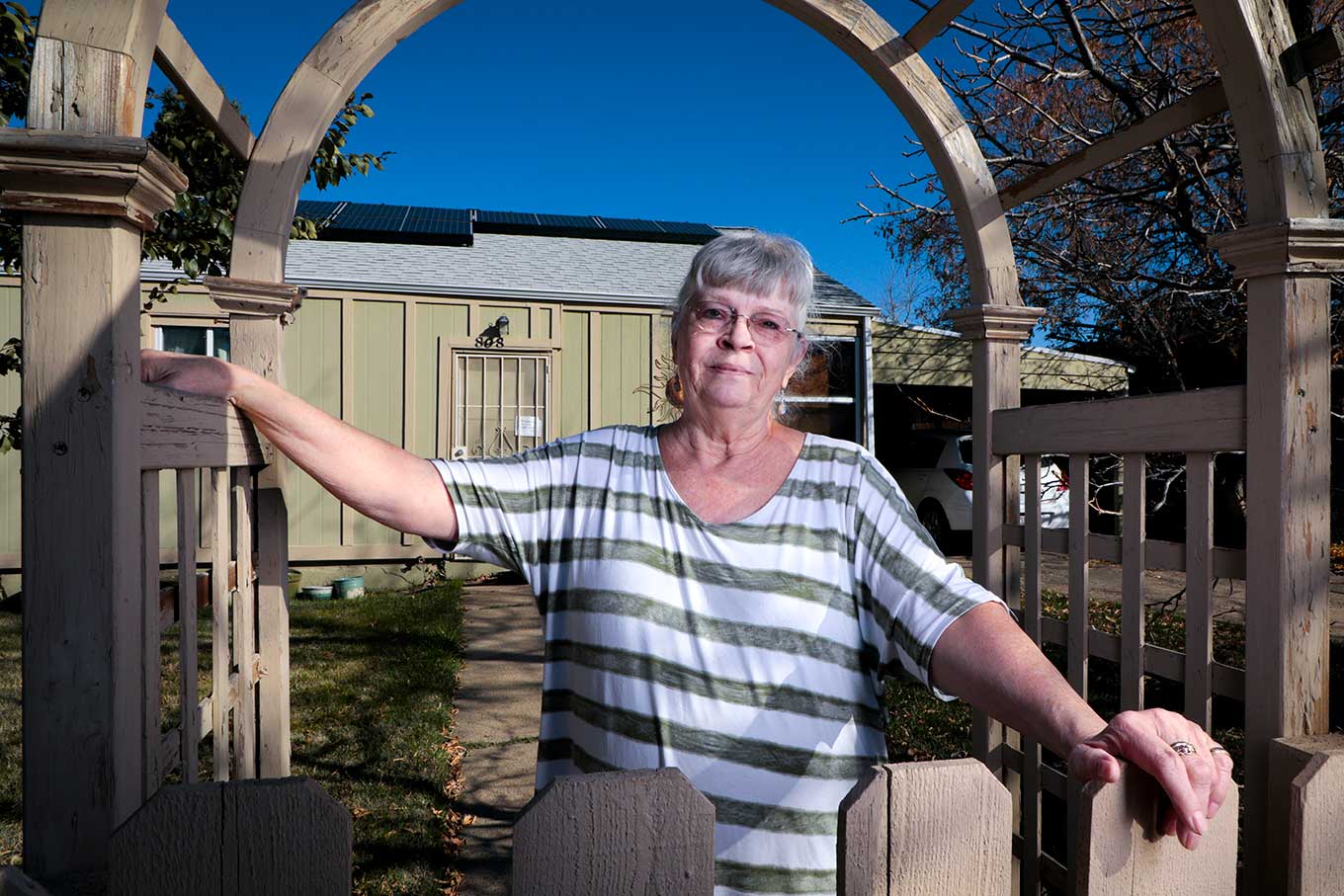
When Peggy Locke bought her 804-square-foot home in Denver’s Westwood neighborhood about 10 years ago, the monthly mortgage–including the loan payment, property taxes and homeowner’s insurance–was around $500. That amount “was perfectly doable,” said Locke, a 77-year-old retired registered nurse living on Social Security benefits, plus a small pension from a former employer.
However, as property taxes and the cost of homeowner’s insurance climbed, her monthly payments for the 2-bedroom, 1-bath house shot up over time. Now, Locke owes about $900 a month, a nearly 80% increase. In the same time period, the average Social Security benefit grew just 52%, according to Social Security Administration data.
Because of the elevated costs, “I just feel like I’m in college, pinching pennies,” said Locke. Recently, she’s had to cut back on fresh groceries and instead turns to canned goods for meals or older items dug from the depths of her freezer for meals.
“I do know where a food bank is if I really get desperate,” she said.
In today’s inflationary economy, attention tends to focus on young homebuyers feeling locked out of ownership. But Locke’s story represents an untold number of longtime Coloradan homeowners struggling to maintain the status quo as the cost of home ownership rises. These challenges are disproportionately impacting older adults on fixed incomes, like Locke.
A 2025 report by Harvard’s Joint Center for Housing Studies found that in 2023, nearly 28% of U.S. homeowners aged 65 and older were cost-burdened (defined as spending more than 30% of their household income on housing and utilities), a jump from 24% in 2019. In that same period, the total number of all cost-burdened U.S. households climbed, too, by a smaller amount: from 21% in 2019 to nearly 24% in 2023.
Unsurprisingly, the burden is especially weighty—and growing at a disproportionately fast rate—for low-income older adults. In 2023, 69% of homeowners aged 65 and older with an annual income of $30,000 or less were cost-burdened. That’s up from 63% in 2019, according to the report.
One of the biggest misconceptions about the cost of homeownership is that once you close on the house, the hard part is over, said Linda Bell, a home lending expert and senior writer at the personal finance site Bankrate. In reality, though, “it’s just the beginning,” she said.
A confluence of factors is contributing to the increasing cost of homeownership. These include more costly homeowner’s insurance, higher property taxes, steeper energy and utility bills, and the growing price of maintenance and repairs.
A 2025 analysis by Bankrate found that the average yearly cost of owning and maintaining a single-family home in Colorado, excluding mortgage loan payments, is $25,766. That’s 20% higher than the national average ($21,400). The report identified house maintenance and repairs as the most significant contributor to these costs.
“A lot of that has to do with the aging housing stock that we have out there,” said Bell. “A lot of homes are 20, 30-plus years old, and when you have those older homes, it costs a lot to maintain them,” she said, pointing to budget-eating repairs that become inevitable with time, like replacing a roof or updating the HVAC system.
According to Census Bureau data, the median home in Colorado is 38 years old. According to the Bankrate report, the average annual cost of home maintenance and repair in Colorado is about $13,000—significantly higher than the national average of about $8,800.
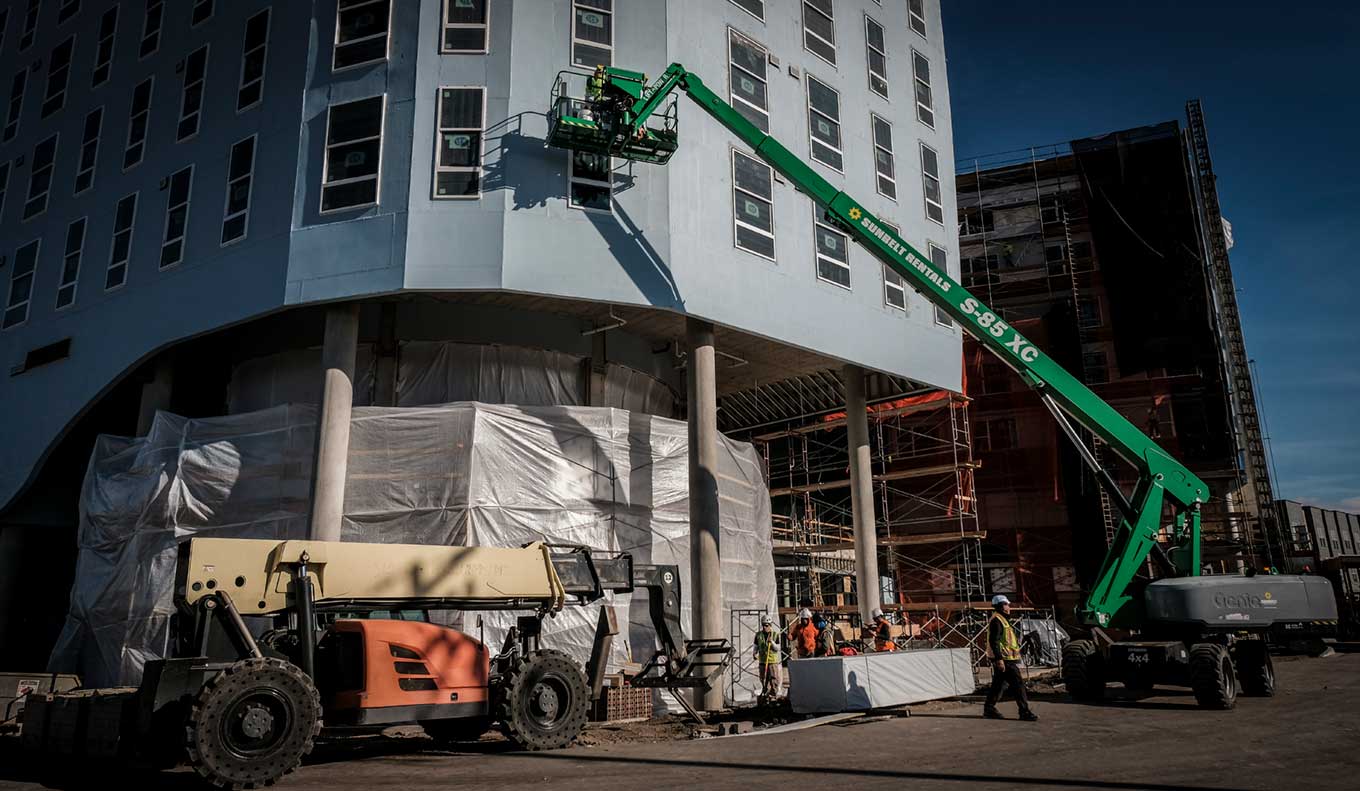
Part of that hefty expense is due to the rising cost of construction labor, inflation, and tariffs driving up the price of materials. According to U.S. Bureau of Labor Statistics data, the average weekly wage for a Colorado construction worker climbed 22% from the first quarter of 2020 ($1,256) to the first quarter of 2024 ($1,529). The cost of materials has similarly soared.
Courtney Nordling, project manager of the home repair program at Habitat for Humanity of Metro Denver, said construction materials cost double what they did about a decade ago. For example, in 2014, “we could replace a window at $140 per window,” she said. “Now, it’s about $300.” Siding an entire home back then used to cost about $1,000 in materials; today, it’s about $2,000, she added.
The organization’s home repair program helps homeowners in the City and County of Denver complete exterior repairs if they make 60% or less of the area median income. This includes replacing windows, doors, siding, fencing, roofing, and tree work.
Most often, the people served through the home repair program are older adults living on a fixed income. “Their home value may be through the roof, and they’re house rich, but they are living off of Social Security,” said Burke Curtis, director of home preservation programs at Habitat for Humanity of Metro Denver.
As homeownership costs have increased, the need for this program, which started in 2012, “is definitely out there more than ever before,” said Curtis. More than 200 people are on the waitlist to receive help with their home repairs, Nordling said.
One such program participant is Locke, who got help from Habitat for Humanity of Metro Denver in 2019 to update the siding on her house, get new windows, and paint the exterior, and again earlier this year to install fencing.
Without Habitat for Humanity’s support, “there’s no way I could have afforded it, short of winning the lottery,” Locke said.
Interior home repairs in the Denver metro area lack a high-visibility sponsor like Habitat for Humanity and have been a bigger challenge. Locke’s bathroom lacked critical accessibility features like grab bars, and the floor was rotting. Locke said she had to cover those costs by taking a lump sum payout on a pension she received from a former employer.
Home upkeep is important, in part, because minor problems can snowball into even costlier issues. But for homeowners on a fixed income, staying on top of the small tasks can be challenging.
“With the cost of materials going up, it’s unavoidable that even basic maintenance is going to be difficult,” said Eric Wells, director of construction services at Pikes Peak Habitat for Humanity, which operates a similar home repair program for El Paso County homeowners.
He gives the example of an air filter for a furnace: If the filter gets clogged and you don’t change it because a new one is more than you can afford, that could damage the furnace, leading to a much bigger repair bill in the future.
Wells said that in El Paso County, “we’re getting phone calls every day right now” from people wanting financial help with home repairs.
“Many of these folks, especially some of the seniors or disabled clients, are feeling lonely, and they don’t necessarily have a support group that could help them do some of the small things or help them pay for one or two things,” he said.
Unfortunately, due to the rising cost of construction materials, “working to fund this program is becoming difficult,” Wells said. In the past six months, because of tariffs and the economic uncertainty surrounding them, price spikes have hit drywall (25%), insulation (15%) and lumber (10%), according to Wells.
The second major contributor to increasing homeownership costs is insurance rates.
“We’re hearing more and more about insurance being such a driver of home costs,” said Brian Rossbert, executive director of Housing Colorado, a statewide organization that works on affordable housing issues. According to the Bankrate report, the average Colorado homeowner’s insurance premium in 2025 was $3,194—the ninth highest of all states (excluding New York, which was not included in the report due to data limitations).
Data compiled by Freddie Mac found that between 2018 and 2023, its borrowers’ average annual insurance premiums jumped 40%, far outpacing inflation.
In Colorado, the increasing prevalence of catastrophic events like hail, flooding and wildfires has driven up insurance rates, said Matt Lynn, a spokesperson for the Colorado Housing and Finance Authority, via email. (CHFA is a statewide organization that funds affordable housing.) Unfortunately, these factors are out of homeowners’ control, Rossbert said, making it difficult to budget and plan for them.
Property taxes are another hard-to-anticipate factor pushing up homeownership costs. “There’s only so much you can plan for” when owning a home, Bell said. “You could say, well, yeah, let me plan for my property taxes going up, but they may go up exponentially as your home value increases.” That’s what has happened for many Colorado homeowners.
The 2020 repeal of the Gallagher Amendment, which had previously capped the portion of property taxes paid by homeowners, led to property tax bills surging by over 30% for many homeowners in recent years, Denverite reported. Temporary cuts have since eased some of the burden, but the state’s property tax assessment rate will go back up in 2026, leading to increased bills next year, even for homes that have not increased in value.
Property taxes can be influenced by many factors, including the availability of housing stock and demand for it, especially for middle-income earners. Other factors, such as wages not keeping up with inflation, or new housing construction catering more to higher earners, can apply additional cost burdens to owners, especially those on fixed incomes.
Colorado has tried to ease the burden for some homeowner groups. People over age 65 can apply for the state’s Homestead Property Tax Exemption, which reduces property tax bills for older adults and veterans with a disability. For others struggling with homeownership costs, Lynn points to the Colorado Housing Connects foreclosure hotline, operated by the Denver-based nonprofit Brothers Redevelopment. The hotline, also sponsored by CHFA, is a lifeline that connects homeowners with resources to avoid foreclosure. Lynn also suggests troubled homeowners consult a list of HUD-approved housing counseling agencies in Colorado.
Additionally, Bell urges homeowners to consider a handful of approaches under their control:
- Appeal their property tax assessment in the hope of lowering the final bill
- Shop around for utility savings through community solar gardens or the Low-Income Energy Assistance Program
- Compare prices on cable TV, internet and phone providers; these are also often negotiable
- Ask an insurance broker for competing quotes for homeowner’s insurance, higher deductibles or bundling of home and auto policies that could offer overall savings
- Build up an emergency savings fund that can cover expenses for at least six months, to weather unexpected costs when they pop up.
Yet experts acknowledge that individual actions can only help so much. “We need more preservation strategies to keep people in their housing situation,” Rossbert said.
Despite the increasing costs of homeownership, Locke, born and raised in Denver, hopes to spend the rest of her life in her current residence. Locke’s parents bought the home in 1972; in 1979, Locke moved in after they both passed and left it to their three children.
About a decade ago, Locke bought out her two siblings to become the sole property owner. And while it’s not perfect, for her, it’s home.
“I would like to stay here,” she said. “I don’t have any desire to move.”