Next to a maze of apartment buildings, light rail tracks and the distinctive red awning of the 132-year-old Buckhorn Exchange restaurant in Denver, a white tent sat atop a dirt lot.
It was late March of 2025, as the first shovels were about to break ground at 901 Navajo Street, the future site of a 190-unit affordable housing project with an attached health care clinic. But before the first ceremonial pile of earth was scooped, Doug Good Feather of Lakota Way Healing Center recited a land acknowledgement from the makeshift stage. A small group of Native dancers moved to the beat of his drumming and chanting.
They were blessing the ground in La Alma-Lincoln Park, not only because it is deeply embedded in the histories of more than 200 tribal nations but because Cranes Landing, as the development will be known, is the site of the first affordable housing community in Denver designed for American Indian and Alaska Native communities (AI/AN).
“When you think about addressing the social determinants of health, housing is one aspect of it, but health care is just as important,” said Shelly Marquez, president of Mercy Housing Mountain Plains, the regional office for the nation’s largest nonprofit affordable housing developer, which is behind the project.
By the end of 2025, the building was topped out at seven stories, and interior work had begun. Residents won’t walk the hallways until January 2027—a date that can’t come soon enough for many in the community. Future residents will have to apply for apartments through Mercy Housing. Fair housing laws mean the property can’t exclude other people who qualify for the property, but the design and services will be tailored toward AI/AN people in need.
AI/AN people experience homelessness and serious health issues at disproportionate rates compared to the general population. The $111 million development has been designed to counter those trends with culturally aware housing and health care through a co-located clinic.
The building sits on Navajo Street and one block away from Osage Street, named for the Native American nations.
“Our institutions have rarely been built around what [Native communities] need,” said Denver City Councilwoman Jamie Torres during the groundbreaking event in March.
More than a century earlier, Camp Weld, a military camp, sat just across the light rail tracks from where the new building is being built. It was there that peace negotiations were held between the chiefs of the Arapaho and Cheyenne people and U.S. Army Colonel John Chivington, who soon after violated those talks and ordered what became known as the Sand Creek Massacre.
Being able to offer permanent housing “that hopefully is built around [American Indian and Alaska Native communities’] needs culturally is kind of a miracle,” Torres said in an interview in early April. “This is such a big issue for such a significant population that we’re building a place in this location with the hopes that they find a really welcoming community there.”
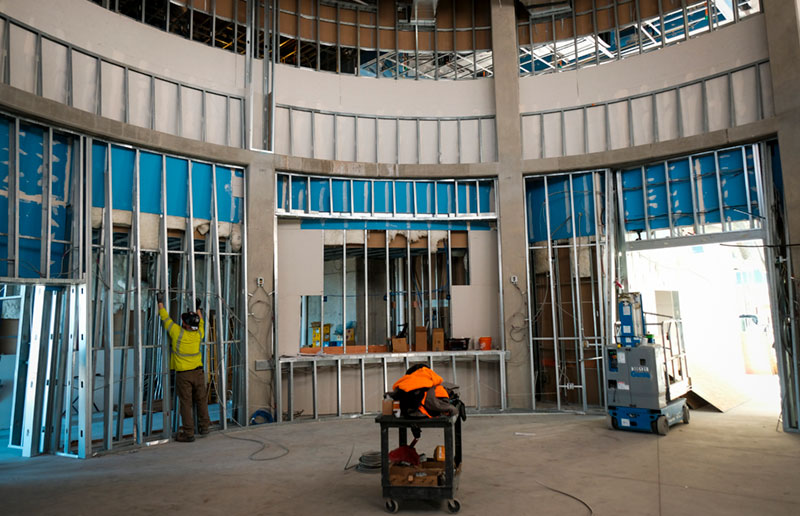
A worker installs metal framing in the main meeting room in the Cranes Landing housing development, on Wednesday, Jan. 14, 2026, in the La Alma-Lincoln neighborhood in Denver, Colo. The affordable housing project will include 190 units, primarily for serving American Indian and Alaska Natives. Photo by Joe Mahoney / Special to The Colorado Trust
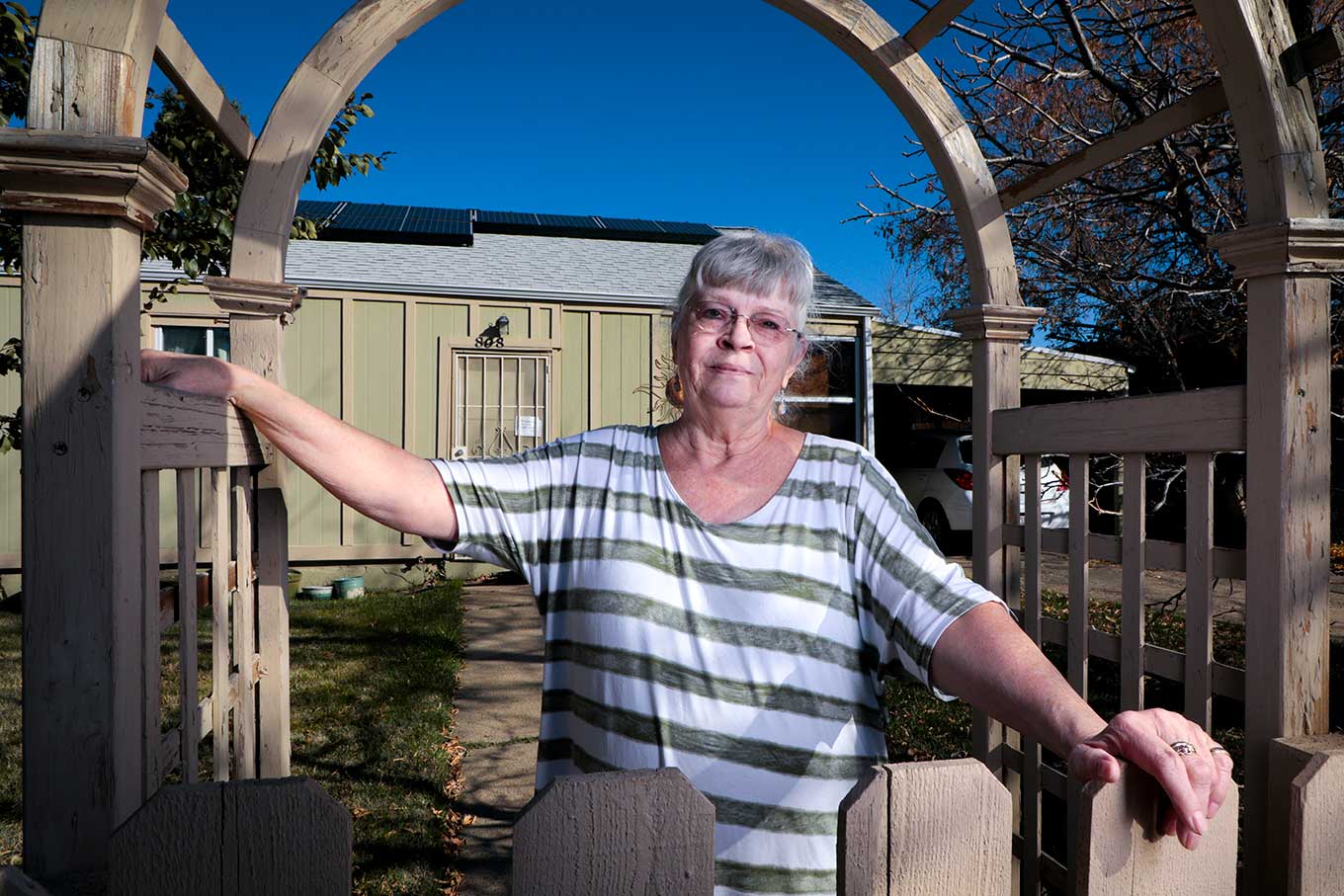
It’s this kind of cultural awareness that’s often lacking in other housing developments. Julia Connors, a member of the Rosebud Sioux Tribe in South Dakota, experienced this firsthand last year when her landlord started getting complaints about the smell of marijuana coming from her Elyria-Swansea apartment.
The 55-year-old explained that her neighbors must be confused. She was burning sage.
“I smudge it out all the time, morning and night, because you never know what we pick up when we go out in that world,” she said.
Connors believes she and her family, which now includes five grandkids, are the only Native residents in her current affordable housing apartment.
That kind of misunderstanding shouldn’t happen at Cranes Landing.
Connors has lived in Denver for 11 years. For about 10 months in 2014, she was homeless with her granddaughter. They lived in shelters and sometimes in Connors’ car. She recently received rent assistance from Native American Housing Circle, a grassroots group working to improve housing conditions for Natives living in the metro area and a partner in the 9th Avenue and Navajo Street project.
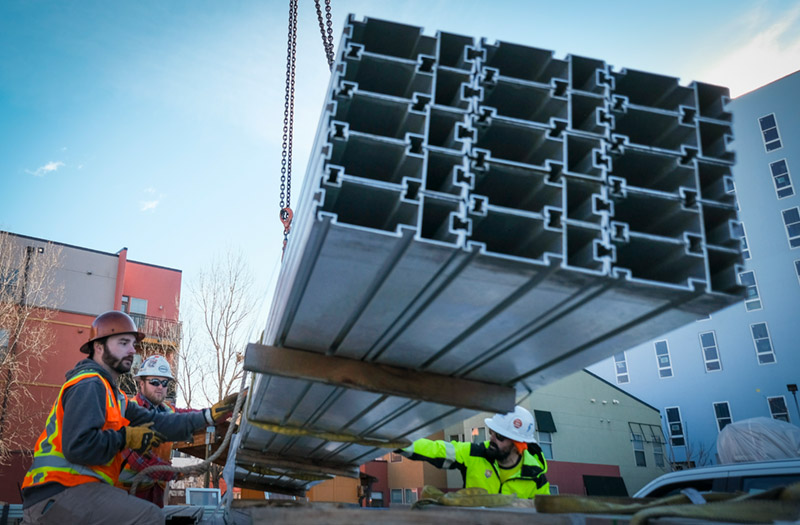
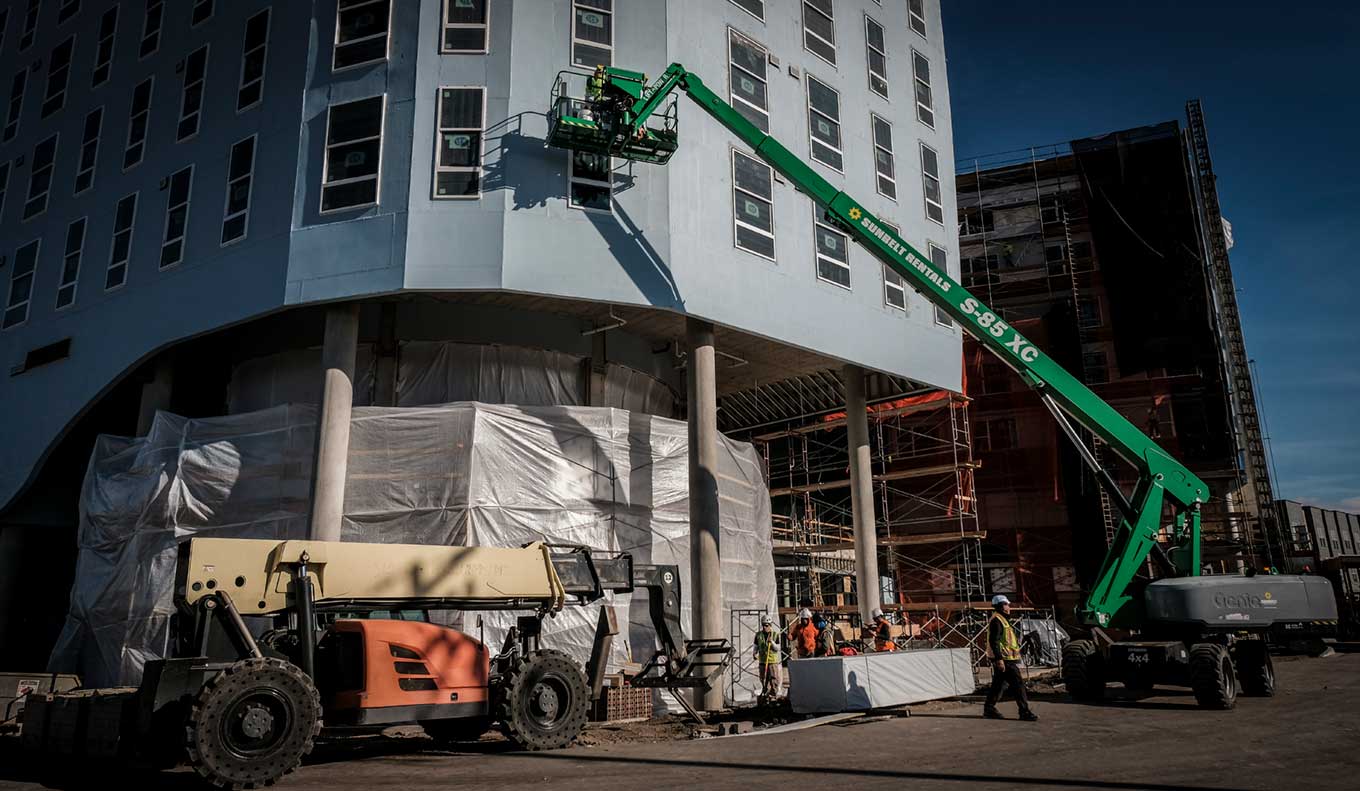
Riggers with RMS Cranes, left, move beams with Luke Crawford of Vanguard Solar Services, right, on Wednesday, Jan. 14, 2026, before placing them at a solar array atop the affordable housing development at 9th Avenue and Navajo Street in the La Alma-Lincoln neighborhood in Denver, Colo. Photo by Joe Mahoney / Special to The Colorado Trust
A disproportionate housing crisis
Colorado is one of just 12 states where more than half of renters are cost-burdened, meaning they’re spending over 30% of their income on housing. Simultaneously, the state has a deficit of 162,000 rental units for individuals earning less than 50% of the area median income, according to a June 2025 report by Mile High United Way.
AI/AN communities are feeling that shortage more acutely than others. Though the groups represent less than 1% of Colorado’s population, they account for nearly 3.5% of the homeless population, according to Colorado’s first state of homelessness report, which was published in 2024.
Twenty percent of AI/AN-identifying Coloradans are considered impoverished, which is well above the 9% poverty rate for the state overall and significantly higher than any other racial or ethnic group, per KFF, Kaiser Family Foundation’s nonpartisan health policy research organization.
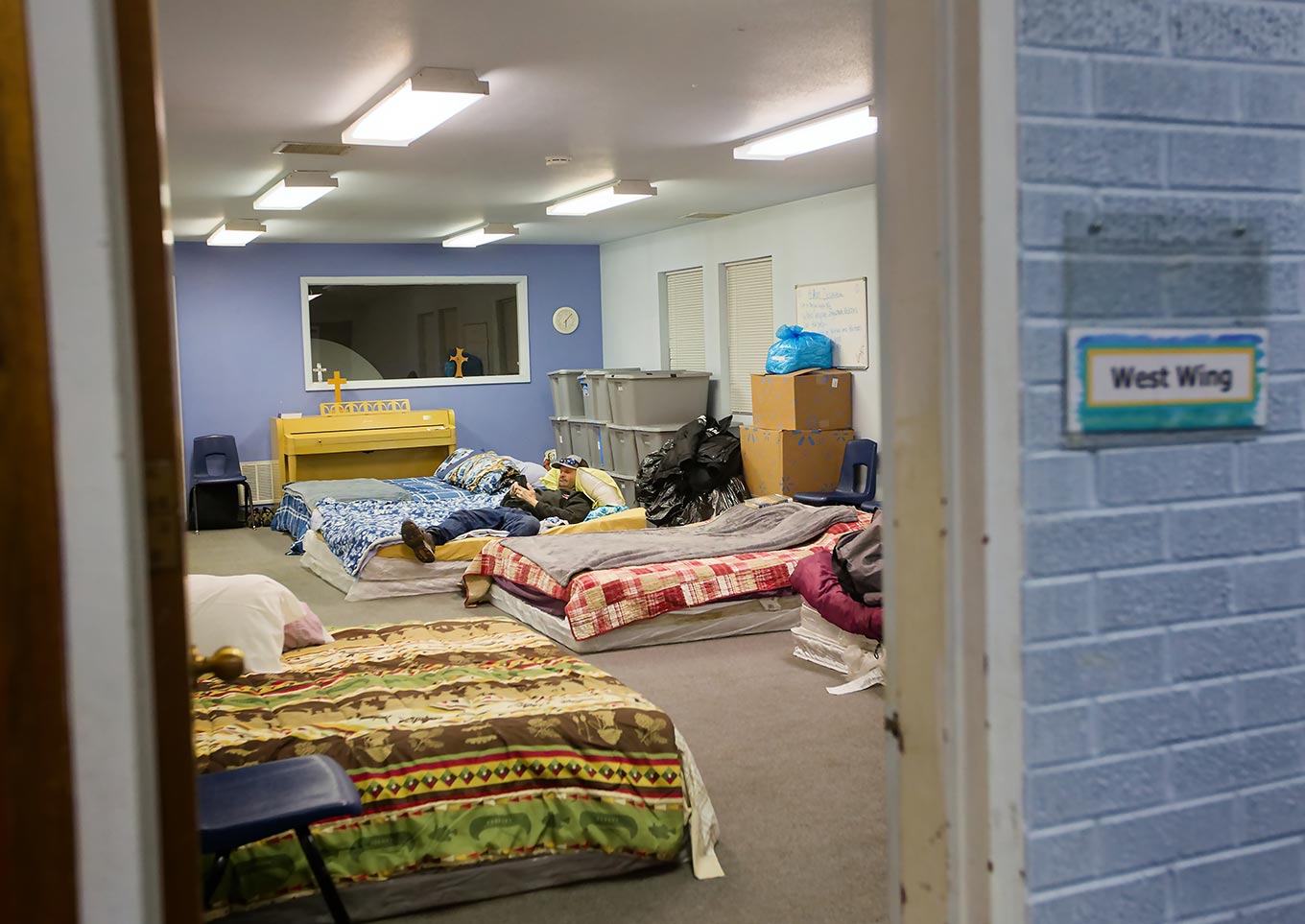
Between late 2021 and September 2022, a Safe Outdoor Space, a year-long campsite dedicated to helping people who identified as Native, was established at West Eighth Avenue and Elati Street, just a couple of blocks from the new affordable housing project.
“There’s a long history of advocacy for trying to find more culturally appropriate ways to address Native homelessness,” said Torres, whose district encompasses the new housing project. “It constantly gets treated like any other homelessness approach when this community just needs a different set of resources, a set of partners and just a really different way of thinking about how we resolve homelessness.”
She and others see 901 Navajo as part of an original approach. Though Mercy Housing and others have built properties that pair supportive housing with health care before, a development project built to address housing and health care disparities for the AI/AN population, mainly through partnerships with and input from Native-led service providers, is novel for Colorado.
Approximately half of the property’s one- to four-bedroom units will be permanent supportive housing for unhoused individuals and families. The rest will be committed to those making 40% to 60% of the area median income. Case management, along with financial literacy, job readiness and youth programming, will be available on site for residents, provided by Native American Housing Circle (a Colorado Trust grantee) and WellPower. Denver Indian Health and Family Services (also a Colorado Trust grantee) will own and operate the on-site clinic.
Though residents may be physically far from their tribal communities—both of Colorado’s federally recognized Native American reservations are located hundreds of miles away, in the southwest corner of the state—the goal is to surround them in elements of their history and culture through classes, community building and thoughtful amenities. Everyone living at the property will receive free RTD transit passes; there will be a medicine wheel at the development; a community garden with native plants and a play area for kids will connect residents to the outdoors; and the community room will have a round shape—a culturally significant design—and provide space for gatherings, an important element of Native life.
This stable living environment built specifically for AI/AN people “creates a sense of community,” said Adrianne Maddux, executive director of Denver Indian Health and Family Services and a member of the Hopi Tribe of Shungapavi (Second Mesa), Arizona. “It’s vital for cultural preservation.”
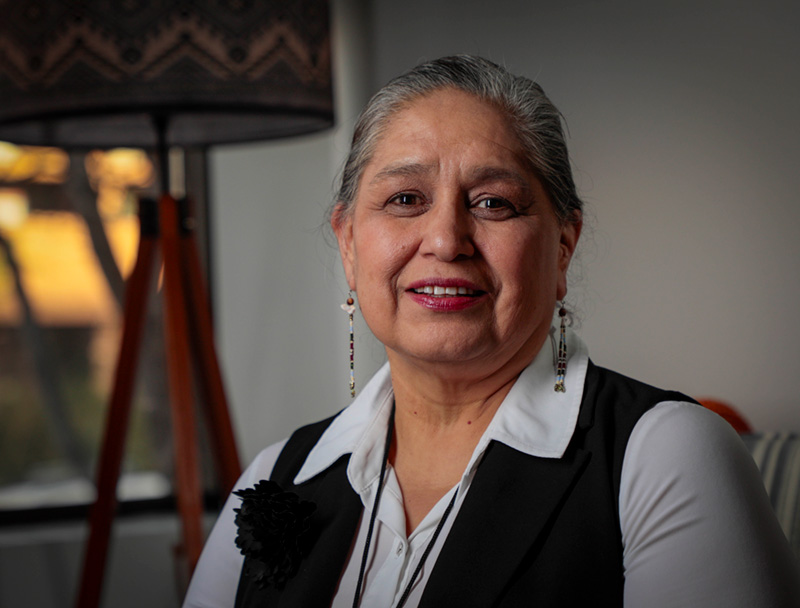
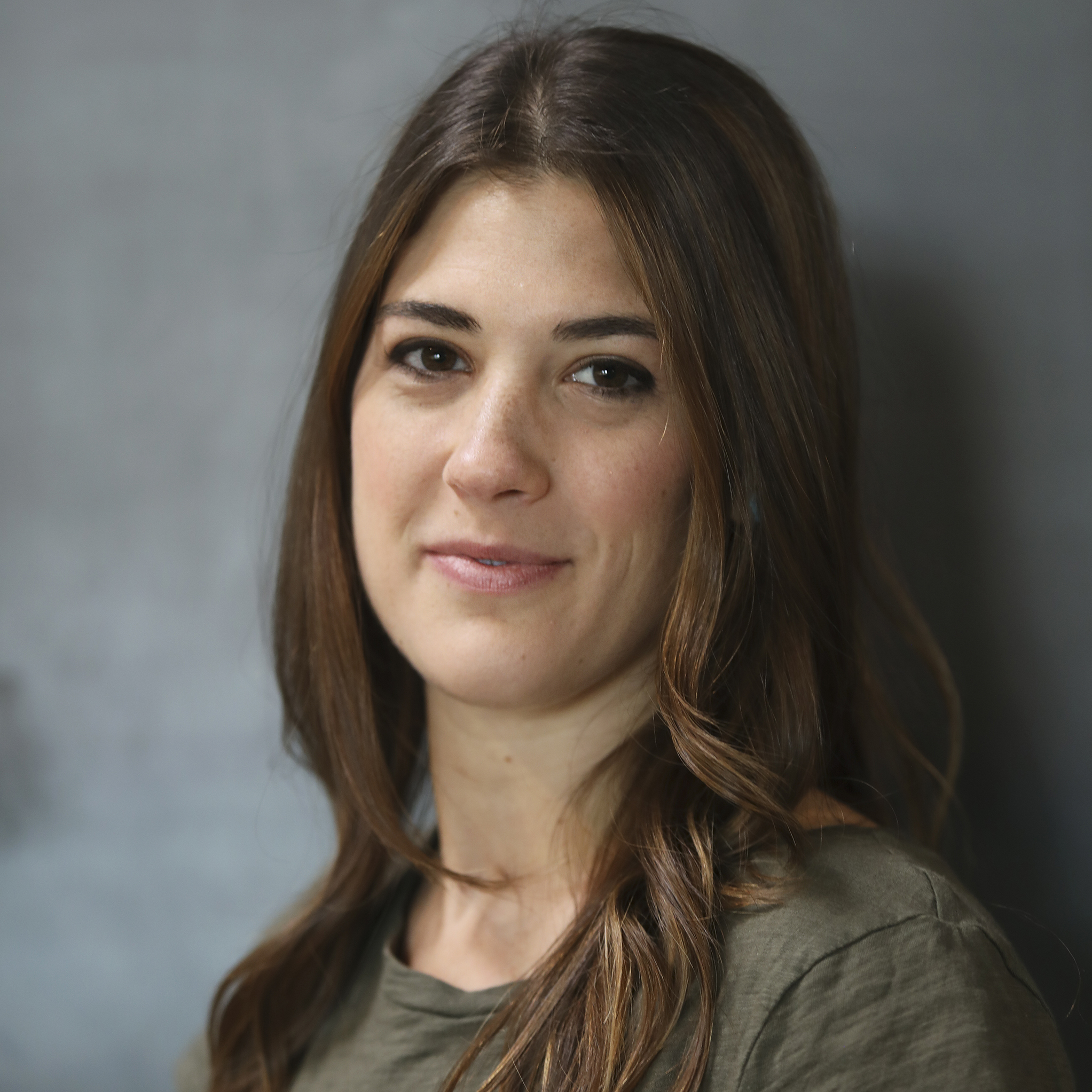
Adrianne Maddux, executive director of Denver Indian Health and Family Services, on Wednesday, Feb. 4, 2026 at her office in central Denver. Maddux’s organization will operate an on-site health clinic at the Cranes Landing housing development, which is designed to primarily serve American Indians and Alaska Natives. Photo by Joe Mahoney / Special to The Colorado Trust
The efforts being implemented at 9th and Navajo can be fortifying and have long-term “protective” effects, said Spero Manson, distinguished professor of public health and psychiatry and director of the Centers for American Indian & Alaska Native Health at the Colorado School of Public Health on the University of Colorado Anschutz Medical Campus. (Manson, a member of the Little Shell Chippewa tribe, holds the Colorado Trust Chair in American Indian Health, which was endowed in 2015 via a grant to the organization.)
“We can see that people who retain a coherent sense of self as Native people are at less risk in terms of emotional and psychological problems, particularly our youth,” Manson said.
Providing better care to combat health disparities
Culturally competent health care can improve patient outcomes and cut down on racial and ethnic health disparities, but it can be challenging to find for city-dwelling Natives.
Even though the majority of the country’s AI/AN population lives in urban or suburban settings, “less than 1% of the total budget of the [federal] Indian Health Service goes to supporting urban Indian health programs across the country,” Manson said.
Denver Indian Health and Family Services is Colorado’s only Urban Indian Health Program (there are 41 of these nonprofits, funded by the federal Indian Health Service, across the country). It primarily serves the Denver metro area through its Sun Valley clinic, which it leases at Mercy Housing’s Decatur Place family housing development, and via a mobile health van.
A lack of culturally competent care can increase mistrust and lead patients to ignore medical recommendations if practitioners don’t understand or respect spiritual practices or traditional medicines, said Jennifer Wolf, an enrolled member of the Ponca Tribe of Oklahoma and a public health consultant based in Aurora.
“We do have these historical things that affect our care, the trauma,” she said. “It also boils down to how many Native people view health as being really holistic. Physical health isn’t separate from mental health, spiritual, emotional health.”
A 2019 national study found that 23% of Native Americans had experienced discrimination in clinical settings and 15% opted not to seek care to avoid such encounters.
Denver Indian Health and Family Services works to counteract those statistics. Its new 18,000-square-foot clinic at Cranes Landing will encompass medical, dental, vision and behavioral health care. It will continue the work the organization has long offered, including hosting a traditional medicine library for patients, involving family members in health care discussions and decision-making and offering areas for smudging and other culturally important practices. The new location—set to open by early 2027—will also more than double the organization’s dental capacity, add exam rooms and could eventually offer more specialty services, such as dermatology.
“To heal our patients, who we also refer to as our relatives, we have to understand their historical background and how it impacts their health today,” Maddux said.
“Culturally appropriate care for Native people involves that deep understanding of their history, their traditions, their values,” she added. “We still suffer the greatest health disparities in the nation.”
The AI/AN community experiences increased rates of metabolic, endocrine and autoimmune conditions, including diabetes and cardiovascular disease; the most emergency room and inpatient admissions of any demographic group; and the highest out-of-pocket Medicaid expenses, according to an evaluation by the nonprofit Center for Improving Value in Health Care and Denver Indian Center (former and current Colorado Trust grantees, respectively). The population’s life expectancy is lowest among all ethnic and racial groups in the U.S.
“Reconnecting to the culture”
In mid-October, a multistory building stood where the white tent had once been, the light blue of drywall being installed adding a touch of color to the construction site. When it’s completed, the façade of 901 Navajo will mimic the geometric patterns seen on Native American blankets (a design finalized with input from Cheyenne and Arapaho tribal members) and encircle a green space—offering a safe place for residents to connect with Mother Earth.
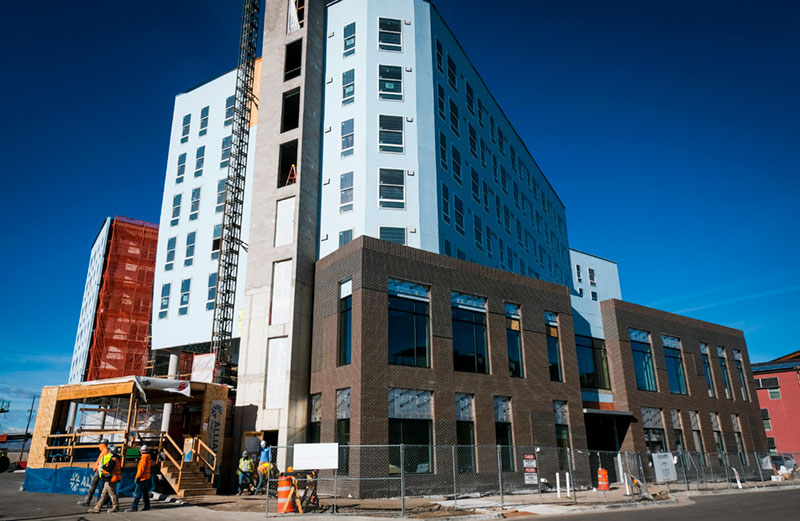
The exterior of the 9th & Navajo Street project is shown in this photograph from Wednesday, Jan. 14, 2026, in Denver, Colo. The Cranes Landing development is the site of the first affordable housing community in Denver designed for American Indian and Alaska Native communities. Photo by Joe Mahoney / Special to The Colorado Trust
“The connection that folks are reclaiming here in Denver is really trying to find and build their own community as Native people while reconnecting to the culture that they come from. Housing plays a big role in that,” said Jolene Holgate, a member of the Diné and executive director of the Denver Indian Family Resource Center, a nonprofit (and Colorado Trust grantee) focused on supporting AI/AN families in the child welfare system.
“Having this housing is that crucial component that we’ve been missing for so long. … They’re able to see folks who look like them. They’re able to build their own community, create these relationships,” Holgate said.
Stable housing is strongly correlated with better health outcomes, so backers hope that having these services in one location will have a snowballing positive effect on the local AI/AN community.
“As the original people of this land,” Holgate said, “it only makes sense that we’re creating those services and those spaces for those Native people.”